A Complete Guide to Truck and Trailer Dimension Limits by Country (Length, Width, Height)
Length, width, and height limits for trucks and trailers vary dramatically across the US, EU, UK, Canada, Australia, and China. Here is the complete country-by-country guide for tour managers, production teams, and freight planners moving gear internationally in 2026.

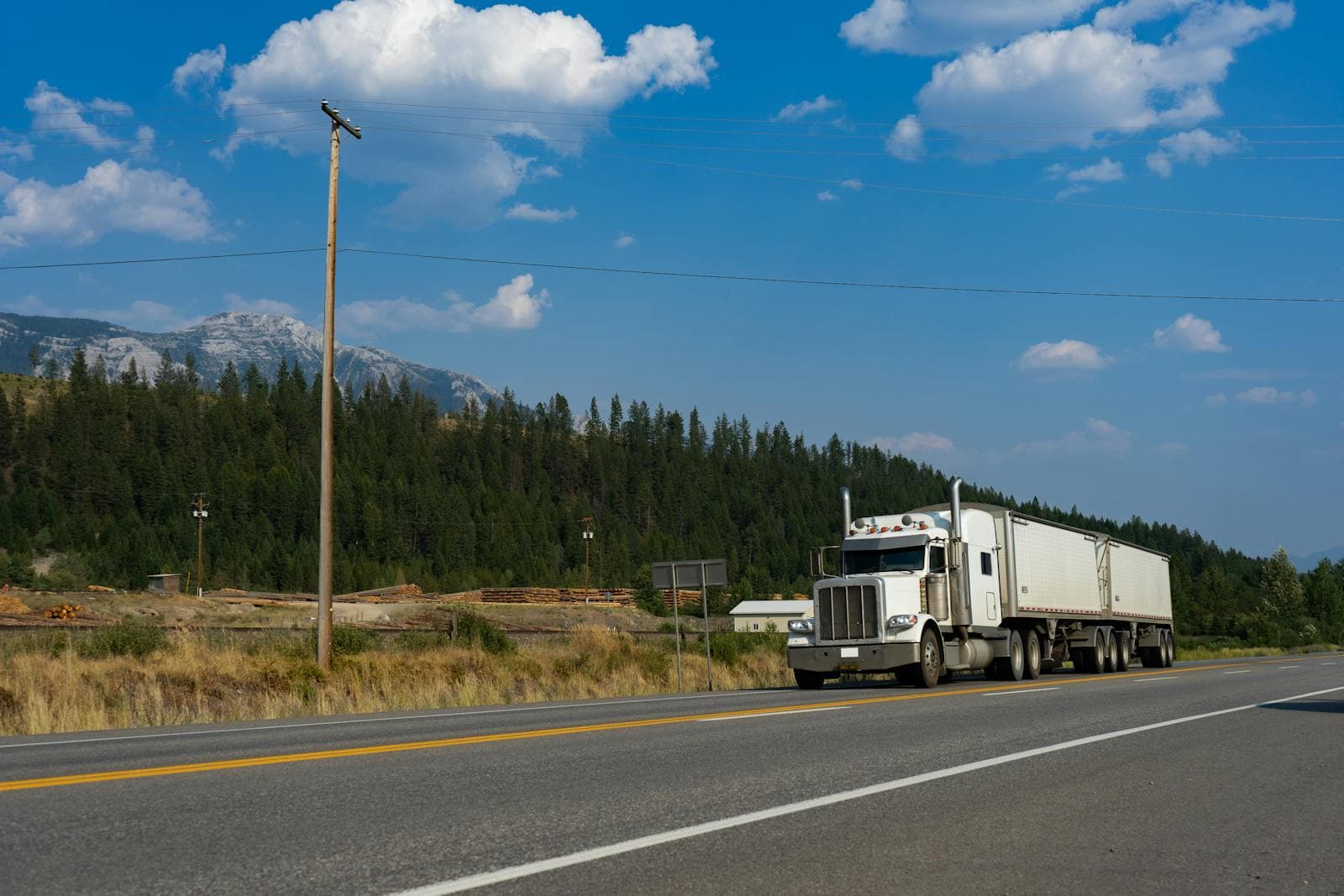
If you have already read our complete guide to truck and container weight limits by country, you know that what is legal to put inside a trailer depends entirely on where the trailer is rolling. The other half of that equation, and the one most production managers run into first, is dimensions. The trailer has to physically fit on the road, fit under the bridges, fit through the tunnels, and stay narrow enough that an enforcement officer at the border doesn't pull you out of line.
Weight gets the attention because the fines are eye-watering. Dimensions get less press but cause more last-minute panic. A North American 53-foot trailer is illegal almost everywhere in Europe. A standard EU semi is two feet shorter than what most US carriers run. The UK has no statutory height limit but most bridges top out at 5.03 meters. Australia just bumped its height ceiling from 4.3 to 4.6 meters in 2026, which sounds small until you are routing a video pre-rig and the four inches make or break the load.
This post is the dimensions companion to the weight-limits guide. Same audience: tour managers, production logistics teams, freight forwarders, anyone routing gear across borders. Same structure: standards first, then country by country, then practical strategies for staying compliant. All numbers reflect 2026 regulations.
Why dimension limits matter as much as weight
Weight violations cost money. Dimension violations cost time. A truck that is two inches too wide is not just non-compliant on paper, it is also a physical safety problem at the moment of contact with an oncoming vehicle in a narrow European lane. That is why the enforcement is sharper and the room for permits is narrower.
For touring and production work specifically, the cost of getting dimensions wrong shows up in three places:
The first is the trailer itself. If you spec a 53-foot dry van for a tour that crosses into Europe, you have a problem. EU rules cap semi-trailers at 16.5 meters (54.1 feet) overall combination length, but those rules also constrain the trailer-only length and kingpin geometry in ways that almost no US 53-footer can hit. You will end up renting EU-spec equipment, which means re-planning the pack.
The second is the bridge. UK and US bridges are not laid out to a single height standard. The UK's working assumption is 5.03 meters of clearance, but lower bridges are common and clearly marked, and a tour bus or production trailer that misjudges a country lane is a national news story for the wrong reasons. The US Federal Highway Administration sets no federal height limit (FHWA Q&A on Vehicle Size and Weight), so the de facto ceiling varies state by state, typically between 13'6" and 14'0".
The third is the permit. If you genuinely need to move something wider, taller, or longer than the legal max, the permit world is its own logistics challenge: oversize load designation, escort vehicles, daytime-only travel windows, no Sunday movement in some EU countries, route approvals that take days. Every one of those constraints touches the production schedule.
Standard shipping container dimensions (worth knowing cold)
Before we get into truck rules, the same containers come up in every conversation. Internal dimensions matter more than external for load planning.
20-foot standard container
- External: 6.06m L x 2.44m W x 2.59m H (19'10.5" x 8'0" x 8'6")
- Internal: 5.89m L x 2.35m W x 2.39m H (19'4" x 7'8.5" x 7'10")
- Usable volume: approximately 33 cubic meters / 1,172 cubic feet
40-foot standard container
- External: 12.19m L x 2.44m W x 2.59m H (40'0" x 8'0" x 8'6")
- Internal: 12.02m L x 2.35m W x 2.39m H (39'5" x 7'8.5" x 7'10")
- Usable volume: approximately 67 cubic meters / 2,366 cubic feet
40-foot high cube container
- External height: 2.90m (9'6"), one foot taller than standard
- Internal height: 2.70m (8'10")
- Usable volume: approximately 76 cubic meters / 2,676 cubic feet
- The standard choice for truss, scenic, lighting tops, anything tall
The high cube is the container the touring world cares about. The extra foot of internal height accommodates the kind of pre-rig that simply will not fit in a standard 40. Worth confirming on every booking, because steamship lines occasionally substitute standard for high cube when stock is short.
European Union dimension limits
Council Directive 96/53/EC sets the baseline for the entire bloc. Member states can be stricter on specific roads or in cities. They cannot be more permissive without their own national derogation.
EU baseline (Directive 96/53/EC)
- Vehicle width: 2.55 m (2.60 m for temperature-controlled trailers with insulated bodywork)
- Rigid truck length: 12 m
- Truck plus trailer (drawbar combination): 18.75 m
- Articulated combination (tractor plus semi-trailer): 16.5 m
- Semi-trailer length alone: 13.6 m maximum
- Height: no formal EU-wide limit, but 4.00 m is the practical standard (European Commission: Weights and dimensions)
The 4-meter ceiling is unwritten but rigorously enforced by infrastructure. Most truss bridges, motorway overhead signs, and underground rail tunnels are built to that assumption. A truck routed under a 3.9-meter overpass with a 4.05-meter load is not getting under it.
Country-specific notes within Europe
- United Kingdom: 16.5 m articulated maximum, with Longer Semi-Trailers (LST) permitted up to 18.55 m on approved routes. No statutory height limit but plan for the 5.03 m bridge clearance assumption. Width: 2.55 m standard, 2.60 m for insulated bodywork (Donbur: Legally, What Is The Biggest HGV / Trailer).
- Germany: Standard 16.5 m. Lang-Lkw combinations up to 25.25 m allowed on a designated network only.
- Sweden and Finland: Among Europe's most permissive. Combinations up to 25.25 m, with some routes allowing even longer European Modular System (EMS) configurations.
- Netherlands: 25.25 m combinations on approved corridors.
- France, Italy, Spain: Adhere to standard baseline, with limited permit allowances for domestic-only movements.
- Switzerland (non-EU but routinely on tour routes): 4 m height limit strictly enforced through alpine tunnels. Width 2.55 m, length 18.75 m for combinations.
United States dimension limits
Like weight, US dimension regulation is layered: a federal baseline that all states must respect on the National Network of designated highways, plus state-by-state rules on everything else.
Federal baseline (23 CFR Part 658)
- Width: 102 inches (2.6 m) on the National Network. States may not enforce lower. Hawaii's separate allowance is 108 inches.
- Trailer length: 48-foot minimum that all states must allow for tractor-semitrailer combinations. 28 feet for each trailer in a tractor-semitrailer-trailer (doubles) combination.
- Total vehicle length: not federally capped on the National Network for tractor-semitrailer combinations, which is why 53-footers are the de facto standard.
- Height: no federal limit. States set their own (FHWA: Federal Size Regulations).
What actually rolls in the US
- 53-foot dry van: the dominant trailer, legal on the National Network in every state except Hawaii.
- 48-foot dry van: still common in routes where 53s have access issues.
- Texas and Oklahoma: 59-foot trailers permitted under state law on certain routes.
- Most state height limits: 13'6" to 14'0" (4.11 m to 4.27 m). Pennsylvania and a handful of others traditionally cap at 13'6" with strict enforcement; most western states allow 14'0".
The state height question matters more than it should. A trailer running at 13'8" with a tarped load is fine in Texas, fine in California, fine in Florida. The same trailer routed through eastern Pennsylvania needs to confirm clearance or commit to a different route. This is also where the famous bridge strikes happen. The National Bridge Inventory tracks thousands of low-clearance structures, and your routing software should know about every one of them.
Canada dimension limits
Canada's provincial transport ministries signed a Memorandum of Understanding standardizing eight common vehicle configurations across the country, but provincial variations remain on top of the federal baseline.
- Width: 2.6 m standard nationwide without permit (J.J. Keller: Canadian vehicle size and weight limits).
- Height: 4.15 m across most provinces. Nunavut and Northwest Territories allow 4.2 m.
- Length: Semi-trailer 16.2 m standard. Combinations vary by configuration, typically up to 23 m for B-trains on designated routes.
- Provincial detail: British Columbia's Commercial Transport Procedures Manual (updated March 2026) and Quebec's Road Vehicle Load and Size Limits Guide are the canonical references for those provinces. Atlantic provinces and the Prairies have their own variations.
For US-based tours crossing into Canada, the 4.15 m height limit is usually the binding constraint. A US 14-foot trailer (4.27 m) needs to confirm clearance on its planned Canadian routing.
Australia dimension limits
Australia's National Heavy Vehicle Regulator (NHVR) administers a national set of mass, dimension, and loading rules with state-level access controls layered on top.
General access vehicles (no permit required)
- Width: 2.5 m
- Length: 19 m for prime mover plus semi-trailer (increased to 20 m effective August 1, 2026 under the Mass, Dimension and Loading regulation changes)
- Height: 4.3 m, increasing to 4.6 m in 2026 (NHVR: Mass, Dimension and Loading changes fact sheet)
The 2026 height increase is significant for the touring world specifically. A 4.6 m ceiling brings Australia in line with what most US production trailers can carry, removing one of the longest-standing routing headaches for AU dates.
Road train configurations (B-doubles, triples, road trains) operate under separate access permits with their own limits, primarily on remote and outback routes where infrastructure permits.
China and Asian markets
China's dimension rules track axle and combination configuration. Headline numbers for the most common configurations:
- Maximum vehicle width: 2.55 m
- Maximum vehicle height: 4 m
- Maximum semi-trailer length: 13.95 m
- Maximum combination length: 17.10 m for tractor-semitrailer
Japan, Korea, and most Southeast Asian markets cluster around similar numbers (4.0 m height, 2.5 m width, 12 to 16.5 m length depending on configuration). Enforcement varies, but the permit window for exceeding standard limits is narrower than in Western markets. Plan compliant from the start.
Practical strategies for international compliance
The principles are the same as for weight, scaled to dimensions.
1. Spec the equipment to the most restrictive jurisdiction on your route. A 53-foot trailer is faster to load, but if any date on your routing crosses into the EU, you will end up swapping equipment mid-tour. Better to standardize on the smaller container upstream.
2. Confirm clearance on every leg of the route, not just the destination. A 14-foot US trailer can run all day in Texas, then fail to clear a New England covered bridge on a regional run. The Canadian border is its own clearance step. Routing software with full bridge data is non-negotiable.
3. Treat the 4-meter EU height as a hard physical limit. Anything above that needs permits, escorts, route approvals, daytime-only movement windows, and in some countries no Sunday operation. The math gets ugly fast.
4. For oversize loads, build the permit timeline backwards from load-in. EU oversize permits commonly take 3 to 10 business days depending on country and route. UK Special Types General Order (STGO) movements have their own notification windows. US state-level oversize permits range from same-day to a week. Build that into the production calendar before the freight ships.
5. Use 3D load planning to confirm physical fit before booking equipment. Knowing that a particular pre-rig is exactly 4.05 m tall as packed (because you modeled it) is the difference between booking a high cube container vs. discovering at the warehouse that your standard container won't close.
Where this connects back to weight
Dimensions and weight are two sides of the same routing problem. A load that's compliant on dimensions but overweight gets pulled at the scale. A load that's compliant on weight but two inches too tall hits the first low bridge. Both checks have to pass.
For the full breakdown of weight rules in the same countries covered here, see our complete guide to truck and container weight limits by country. Together they cover the two binding constraints on every international gear movement.
How Truck Packer handles dimensions in load planning
Truck Packer models every container, trailer, and case as a 3D object with real dimensions in meters. When you build a load plan against a 53' dry van, the trailer is a 16.154m x 2.591m x 2.743m box and the case you drop in either fits or it doesn't. The math is visual, not theoretical. Switch the container profile to a 40-foot high cube and the same case stack either still fits or shows you exactly where it's overflowing.
That matters for international touring because the binding dimension constraint changes every time you change countries. Modeling the pack against the right equipment, before the truck arrives, is the only way to avoid the loading-dock conversation no production manager wants to have.
Conclusion
International dimension rules look intimidating on a chart, but the practical playbook is short: know the standards, plan for the most restrictive jurisdiction on your route, treat 4 meters of height and 2.55 meters of width as the European ceiling, confirm bridge clearances state by state in North America, and build oversize permit timelines into the production calendar from day one.
The trailer is going to fit or it isn't. The honest version of that conversation happens in load planning, not at the border.
Put it to work: log in to Truck Packer and build your load plan.

