Trade Show Drayage Costs in 2026: A Survival Guide for Exhibitors and Production Teams
Trade show drayage in 2026 is eating exhibitor budgets faster than ever. Here is how CWT billing, special handling, and a tightening freight market actually work — and the load-planning discipline that stops the invoice from doubling the quote.

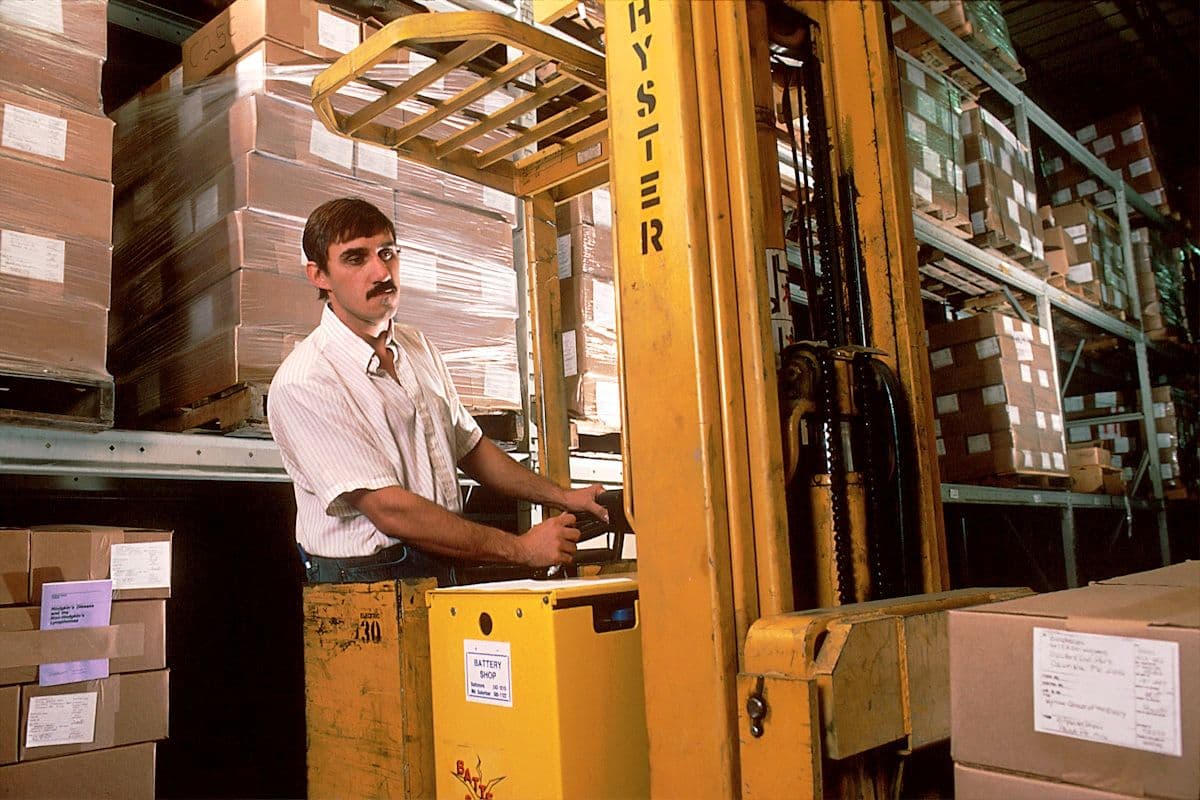
If you have ever watched a 53' of trade show freight roll up to a convention center on a Sunday night, you already know the first rule of exhibit logistics: the truck is the cheap part. The expensive part starts the moment your crates touch the marshalling yard. That is drayage, and in 2026 it is costing exhibitors more than ever — not because rates alone have exploded, but because the surrounding freight market has quietly tightened around it.
Drayage is the single most misunderstood line item in a trade show P&L. A booth builder can quote a sharp number in January, and by show week the material handling invoice has doubled because a crate got reweighed, arrived on an overtime day, or showed up in three pieces instead of one. If you run production, tour logistics, or corporate AV and you also touch trade shows, this is the expense line where planning discipline pays for itself over and over.
Here is how drayage actually works in 2026, where the hidden costs live, and a practical framework for getting your load onto the show floor without lighting a stack of cash on fire at the dock.
What drayage actually is — and why the invoice never matches the quote
Drayage at a trade show is the short-haul handling that moves your freight from the marshalling yard (or the dock, if you are spot-on-time) to your booth space, and then back out after breakdown. The general service contractor (GSC) — Freeman, GES, Shepard, Fern, and a handful of regional players — owns the show floor and charges drayage per hundredweight (CWT), with a minimum that almost no one hits.
The GSC bills on the greater of actual weight or dimensional weight, rounded up to the next 100-pound increment, per shipment. That last word is where exhibitors bleed money. A single palletized shipment at 450 lbs pays the 500-lb CWT rate once. The same gear split across three loose road cases — because your warehouse sent them separately — gets billed at three individual minimums. The freight is identical. The invoice is not.
Layer on the surcharges: overtime (any freight moved outside of straight-time hours), special handling (anything not stackable or not on a standard pallet), marshalling yard, small package, and late-to-warehouse fees. On a typical national show in a Tier 1 city, drayage surcharges routinely add 30-60% on top of the base rate. Exhibitors who submitted what they thought was a $3,800 material handling budget see a $6,200 invoice after move-out and have no idea where the delta came from.
The 2026 freight backdrop is making drayage worse
Drayage has always been its own beast, but the wider freight market is no longer insulating exhibitors the way it did during the 2023-2024 trucking recession. FreightWaves reports outbound tender rejection rates sitting around 14% through April 2026 — roughly three times the same week in 2025 — with diesel up more than a dollar a gallon since early March on geopolitical pressure. Capacity is tighter, carriers are more selective, and the cost of getting freight to the advance warehouse on time is climbing.
On the port side, drayage and chassis supply continue to be uneven. Port City Logistics and C.H. Robinson both flagged persistent chassis shortages and tighter appointment windows heading into the back half of 2026, and savvy drayage buyers are now treating chassis access as a planning variable rather than something that shows up when the container does. All of this matters for trade shows because so much exhibit freight is tied up in the same capacity pool — especially for companies shipping international gear, custom builds from overseas manufacturers, or oversized scenic.
The net effect: the penalty for showing up late, splitting a shipment, or sending loose crates is higher in 2026 than it was two years ago, because the upstream freight is less forgiving.
The hidden drayage costs that kill budgets
Once you know where the meters are running, you can plan around them. These are the cost categories that show up on almost every post-show audit we see:
- Multiple pieces, one shipment on paper — but stacked wrong. If your crates are not banded or palletized as a single unit, the GSC can bill each piece to its own minimum. A tightly built truck pack with consolidated cases can cut this bill by a third.
- Special handling fees. Loose, non-stackable, crated-but-not-pallet-friendly, protruding hardware, or mixed shipments (carpet in the same truck as booth) all trigger special handling — typically a 30% adder on the CWT rate.
- Overtime drayage. Freight that arrives before straight-time move-in, after move-in closes, or during union overtime windows gets billed at OT rates. Miss the advance warehouse deadline and you are going direct-to-show, which almost always ends up on OT.
- Small package / FedEx handling. Every "just send it overnight" box you ship to the show floor becomes its own billable drayage event at a per-box fee that can exceed the shipping cost itself.
- Marshalling yard wait time. Drivers who dwell at the yard past their free window get detention charges that the GSC passes straight through — and sometimes marks up.
- Empty storage and outbound. Drayage is a round-trip charge. The number you get quoted at move-in is only half the bill.
The planning discipline that actually saves money
Most of the drayage savings on a trade show budget are locked in before the truck leaves your warehouse. By the time freight hits the marshalling yard, your options are mostly limited to which surcharges you are going to pay. Here is where the real leverage lives:
1. Consolidate ruthlessly
Every loose case you eliminate is a CWT minimum you do not pay. Palletize, band, and label as a single shipment wherever possible. If you are shipping booth, product, literature, and AV from different sources, route them through one freight forwarder so they arrive as a single BOL. Split-shipment exhibitors are the GSC's most profitable customers for a reason.
2. Plan the load, not just the list
A pull sheet is not a load plan. A pull sheet tells you what gear goes to the show. A load plan tells you how it fits in the truck, in what order, and what it weighs — which is exactly what the drayage invoice is calculated on. Visual 3D load planning is no longer a nice-to-have; it is the difference between showing up with a clean, single-consolidated shipment and showing up with a pile of loose cases that each get their own CWT minimum.
This is the problem Truck Packer was built to solve. Drop your cases and scenic pieces into a container, see exactly what fits, share the 3D pack link with your warehouse and your lead hand, and ship a single documented unit. Exhibit freight consolidators use it to verify what is actually going in the truck before the driver closes the door — because arguing with a drayage supervisor at the yard is not a winning strategy.
3. Hit the advance warehouse deadline
Advance warehouse rates are always cheaper than direct-to-show, and the real win is scheduling. Freight at the advance warehouse gets sequenced onto the show floor during straight-time hours. Direct-to-show freight hits the marshalling yard on whatever day it arrives and waits its turn — which is how exhibitors end up paying overtime drayage on a Sunday night load-in.
4. Label like the invoice depends on it (because it does)
Every piece needs the show name, booth number, target date, and piece count ("1 of 3, 2 of 3..."). Missing labels are the easiest way for the GSC to mark your freight as "special handling" or to lose a piece and charge you a search fee. Print two copies of the label per case — they tear.
5. Weigh and measure at your dock
Know the actual weight and dim-weight of every piece before it ships. The GSC will reweigh on arrival, and they will use the higher number. Exhibitors who trust the booth builder's old paperwork from 2019 are the ones getting reweigh surprises. Weigh your cases in your warehouse, lock the numbers into your shipping documents, and if something is off, you have a defensible starting point for a dispute.
The AVL crossover: when production freight meets the trade show floor
A quiet thing has been happening in the AVL world: more production companies are being asked to support corporate exhibits, keynote stages inside trade shows, and sponsor activations at large events like CES, IBC, InfoComm, NAB, and Cinemacon. The gear is the same stuff that rolls on a tour — road cases, pre-rig truss, distro, dimmer beach, video walls — but the logistics model is completely different.
Touring load-ins are controlled. You own the truck, your crew works the dock, and the union stage hands meet you in the venue. Trade show load-ins are the opposite. The GSC owns the floor. Your truck gets a target time or a check-in window. You do not touch your own freight once it enters the hall. And every time a forklift touches a case, somebody is billing for it.
Production companies that treat a trade show booth like a one-off show almost always overpay on drayage. The ones that treat it like a freight and load-planning exercise — consolidate, pre-weigh, pack to a documented plan, hit the advance warehouse — come out the other side with an invoice that matches the quote.
A quick drayage cost sanity check
Before you sign off on any trade show budget in 2026, pressure-test the drayage number against these quick checks:
- What is the total quoted weight, and does it assume straight-time or OT rates?
- How many pieces are in the shipment, and are they consolidated or loose?
- Is anything on the manifest going to trigger special handling (uncrated scenic, loose cable, odd-shaped cases)?
- What is the advance warehouse cutoff, and is your warehouse realistically going to hit it?
- Has anyone actually weighed the freight, or is the quote running on last-show estimates?
- Is the outbound drayage included in the quote, or is that a separate surprise after the show?
If you cannot answer all six with confidence, assume the final invoice is going to be 25-40% higher than the quote. That is the going rate for not having a load plan.
Drayage is a planning problem, not a negotiation problem
Exhibitors spend a lot of time trying to negotiate drayage rates with the GSC. That is largely a waste of energy — the rates are posted in the exhibitor kit and they are basically non-negotiable below the enterprise tier. What is negotiable, always, is the number of pieces in your shipment, the weight on the BOL, and whether your freight arrives during straight time.
In a 2026 freight market with elevated tender rejections, higher fuel, and persistent capacity pressure, the shows that go well are the ones where the warehouse knew what was going in the truck, the load plan matched reality, and every case had a label that matched the invoice. That is not a drayage strategy. That is a logistics discipline — and it is the same discipline that pays off on a festival loadout, a corporate keynote, or a cross-country tour.
If you are heading into a busy trade show season and you want a 3D load plan your warehouse and your freight forwarder can both actually use, start a pack in Truck Packer and build the load before the truck shows up. The drayage invoice will thank you.
Everything above lives in the app. Log in to Truck Packer and start packing.

