Self-Powered Line Arrays Are Erasing the Amp-Rack Truck Footprint
Compact powered line arrays debuting at InfoComm 2026 let productions drop amp racks and copper multicore from the load. Here is what that does to your truck pack, and the cost-per-mile math behind it.

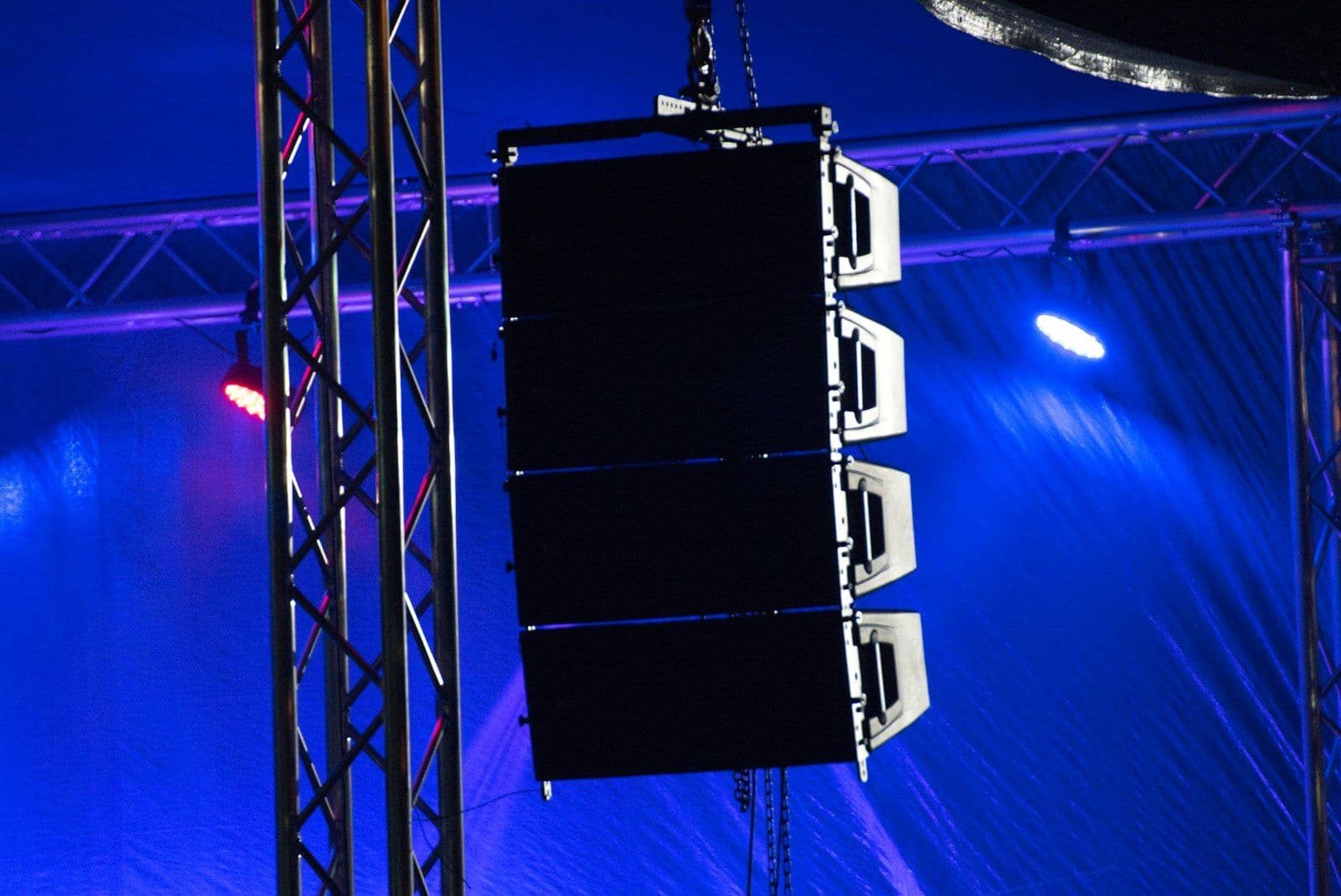
The loudest news out of InfoComm 2026 was not about getting louder. It was about getting lighter. A wave of self-powered line arrays landed in Las Vegas, and for anyone who loads a truck for a living, the interesting part is what these boxes leave behind on the dock: the amp racks.
The amp rack is a truck problem, not just an audio problem
In a traditional passive rig, the loudspeakers are only half the load. The other half is the amplifier world that drives them: heavy steel-and-copper amp racks, the power distro to feed them, and the thick multicore speaker cabling that runs from the racks out to every box in the array. Those racks are dense, awkward, and they eat floor space in the trailer that you would rather give to the actual show.
Self-powered boxes move the amplifier inside the cabinet. Each enclosure carries its own onboard DSP and amplification, so the rig drops the amp racks entirely. The cabling story changes too: instead of running fat, expensive copper speaker multicore, a powered array runs two light cables to each box, one for signal (analog or a network protocol like Dante) and one for AC power. That is a meaningful cut in both weight and the cable trunks you have to pack, as line-array primers on the powered-versus-passive tradeoff have long pointed out.
The InfoComm 2026 boxes that make the case
Three debuts show how far the compact powered category has come.
DAS Audio's EVENT-30A is the headline number. It is a self-powered two-way box with two 10-inch neodymium transducers and two 1.75-inch compression drivers, putting out 2,000 watts of peak power and a maximum 138 dB (AES75), all in an enclosure that weighs 58.4 pounds. It rigs up to 24 units per array, and its Fast Set Splay system lets the crew dial splay angles right off the transport dolly, so the array goes together faster with fewer loose parts.
EAW's NT206L leans even harder into the lightweight angle: an active box under 32 pounds with 1,500 watts of onboard power and a 139 dB max, built around two 6.5-inch low-frequency drivers and a 1.75-inch high-frequency driver. Its Adjustable Horizontal Directivity feature swaps between four coverage profiles with toolless field adjustments, which is one less processor decision to make and one less thing to truck.
K-array's Koral KO102 comes at it from the install and corporate side, a single architecturally clean enclosure with six 3.15-inch woofers and a 1.1-inch tweeter hitting 128 dB peak. The pitch is one box that behaves like both a line array and a point source, which is the same theme: fewer separate components to specify, ship, and rig.
What it actually changes on the load-out
For a small-to-mid production, dropping the amp racks is not a rounding error. It is a category of items off the pack list: the racks themselves, their road cases, the speaker multicore trunks, and a chunk of the power distribution. That frees real cubic feet in a one- or two-truck rig, the exact size of show where every pallet position is fought over.
It also shifts where the weight sits. An individual active cabinet is heavier than its passive twin because it is carrying its own amplifiers, but once you account for the racks and heavy copper you no longer load, the total system weight is often comparable or lighter, and it is distributed across the speaker cases instead of concentrated in a few back-breaking amp racks. That is easier to dolly, easier to stack, and easier to balance across axles.
The packing takeaway
Whenever you pull a category of gear off the truck, your old load plan is wrong. The amp-rack pallet positions you used to reserve are now open, the weight distribution has moved from a few dense racks to a row of speaker cases, and the cable trunks shrank. That is exactly the kind of change worth re-planning before load-in rather than discovering at the dock.
This is where building the load in Truck Packer earns its keep. Model the new powered array as cases, drop the amp racks and multicore trunks out of the inventory, and you can see in 3D how the freed space reshapes the pack, whether you can tighten from two trucks to one, and how the lighter, more evenly distributed load sits across the deck. The boxes got smarter at InfoComm. The smart move on your end is making sure the truck plan keeps up.
Ready to build your load plan? Log in to Truck Packer and pack it.

