Northeast Parkway Restrictions: Where a Tour Truck or Trailer Cannot Go
Can you drive a Sprinter with a trailer on the Merritt? No, and it fails twice. Road by road on where a van, trailer, box truck or 26-footer can and cannot legally go in New York, Connecticut and Boston, with the clearance numbers and what to put in the advance.

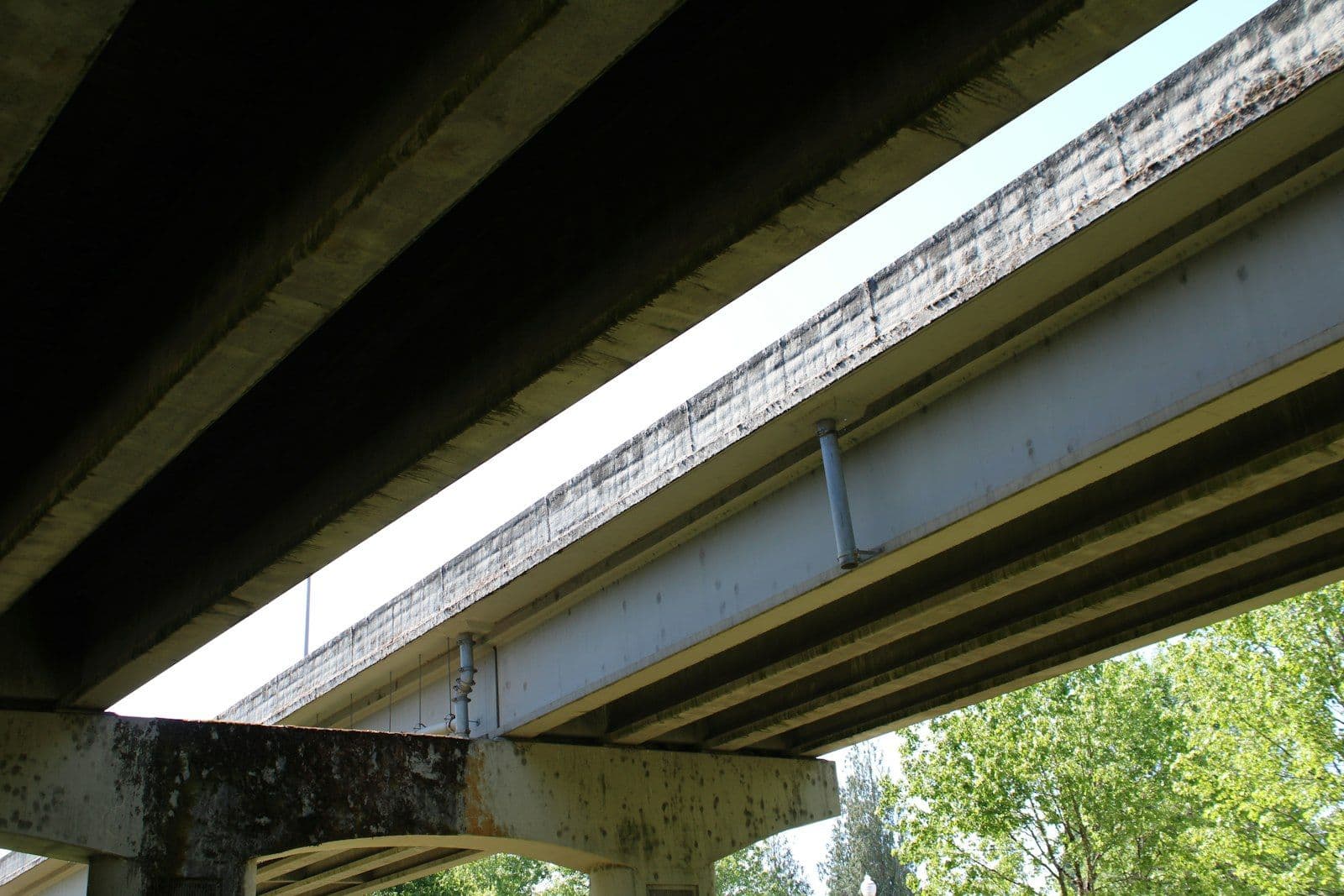
We ended up on one of the parkways last week and came within a hair of a ticket, which is a thing that happens to touring people constantly and almost never shows up on an advance. Everybody in this business knows the big rules: 13'6" is the number, 80,000 pounds is the number, don't run out of hours. Almost nobody carries the Northeast rules in their head, and the Northeast rules are not about being too heavy or too tall for the interstate. They are about being on a road that never wanted you at all. So here is the plain version of what a tour can and cannot legally drive up there, road by road, with the numbers.
Can I drive a Sprinter with a trailer on the Merritt Parkway?
No, and it fails twice. Connecticut bars all trailers on the Merritt, the Wilbur Cross and the Milford Parkway, with no exception for a small gear trailer behind a passenger-registered van. The van itself is also over the limit. Connecticut caps parkway vehicles at 8 feet tall, 24 feet long and 7'6" wide, and Mercedes lists the Sprinter cargo van at 100 inches standard roof and 107 inches high roof, which is 8'4" and 8'11". The high-roof Sprinter that every band on earth runs is eleven inches over before you hook anything to it, and the 170 extended at 290 inches is over on length too.
What about a box truck, a rental truck or a 26-footer?
Prohibited in Connecticut by name. The state list calls out box trucks, tractor trailers, RVs, campers and rental trucks specifically, including U-Haul, Penske, Ryder, Budget, Enterprise and the Home Depot and Lowe's fleets. Buses are out as well, apart from certain school buses. A pickup on passenger registration is fine if it fits the dimensions.
Can a truck use a New York parkway?
No. New York's parkway system prohibits commercial vehicles outright across 32 named parkways: the Hutchinson River, Saw Mill River, Taconic State, Bronx River, Cross County, Sprain Brook, Bear Mountain and Palisades Interstate upstate and in Westchester, the Belt, Grand Central, Henry Hudson, Cross Island, Jackie Robinson, Mosholu, Pelham, FDR Drive and Harlem River Drive in the city, and the Southern State, Northern State, Meadowbrook, Wantagh, Sagtikos, Sunken Meadow, Ocean and Robert Moses Causeway out on the Island. This is not a suggestion about which route is faster.
And a car or van towing a trailer in New York?
Depends on the parkway, so read the signs rather than a forum post. What New York states plainly is the commercial-vehicle ban and the physical problem behind it: low stone bridges on the system carry posted clearances as low as 6'11", and pulling a tractor trailer back out from under one runs over $10,000 in towing fees before anybody talks about the ticket or the bridge repair bill. Several parkways post their own no-trailer rule on top of that. If the trailer is on the run because the run is work, assume you are the commercial vehicle they mean.
Can I run Storrow Drive or Memorial Drive in Boston?
Not in anything taller than a car. Storrow Drive, Memorial Drive and Soldiers Field Road run bridges in the nine to ten foot range, and getting peeled open by one is called getting storrowed. NBC Boston's crash review counted 14 storrowings by late summer 2024 against a record 17 in 2022, with the Harvard Street bridge alone hit more than 30 times in a decade. The DCR commissioner's explanation of why the signs do not work is the whole problem in one line: people are not looking at the signs, they are looking at their GPS.
The Merritt is the one that catches production
Forty concrete underpasses on the Merritt were originally built to about eleven feet at the abutments, the road carries roughly 90,000 vehicles a day against a design of 18,000, and the violation ticket is only $92, which tells you the ticket was never the expensive part. The expensive part is the tow, the missed load-in, and whatever the roof of the truck used to be.
New York is actively enforcing this right now
On July 27, 2026 the state announced a coordinated awareness and enforcement push on bridge strikes, citing 310 reported strikes in 2025 and concentrating troopers on the Lower Hudson Valley, New York City and Long Island. New York also added an 8-point violation for striking a bridge back in February. Eight points is a suspension conversation for a driver, not a fine, and if the driver is your driver on a leg you booked, that is a tour problem in October, not a paperwork problem today.
The actual failure is the phone in the mount
Google Maps and Waze do not know your height, your length, or that you are pulling anything. They route a Sprinter and a 26-footer identically, and the parkway is usually the faster line on the map, which is exactly why it gets offered. New York's answer is 511NY's Trucker Mode, which flags height and weight restricted bridges and marks the parkways as restricted, and it is free. Set the vehicle profile once, at the top of the run, with the real loaded height rather than the number off the spec sheet, because the spec sheet does not include the AC unit, the roof rack, or the fact that the truck squats differently empty than it does full.
What to put in the advance
Three lines in the day sheet cover most of it. First, the measured height of every vehicle on the run, written down where the driver can see it, not remembered. Second, an explicit note on any Northeast date that parkways are prohibited and the routing is interstate and truck route only, which matters most on the runs into New York, Connecticut and Boston where the venue's own directions were written for cars. Third, whether anything on the run is towing, since a trailer flips a legal vehicle into an illegal one in Connecticut without changing a single dimension.
The other half of this is upstream of the routing. Every extra vehicle you add to a run is another rig that can end up on the wrong road, and the reason a run ends up with a random cargo van or a rented box truck is almost always that the pack did not close. If the gear fits in the trucks you already have, you never have to solve the parkway problem for a fourth vehicle nobody planned for.
Ready to see if it all actually fits before you rent the extra truck? Log in to Truck Packer and build the load plan.

