How Much Actually Fits Inside a 53-Foot Trailer?
A 53-foot dry van gives you about 52'6" x 99" x 108" inside, 3,800 to 4,000 cubic feet, 26 pallets straight or up to 30 turned, and roughly 150-plus truck pack road cases stacked three high. The real interior capacity numbers, with sources.

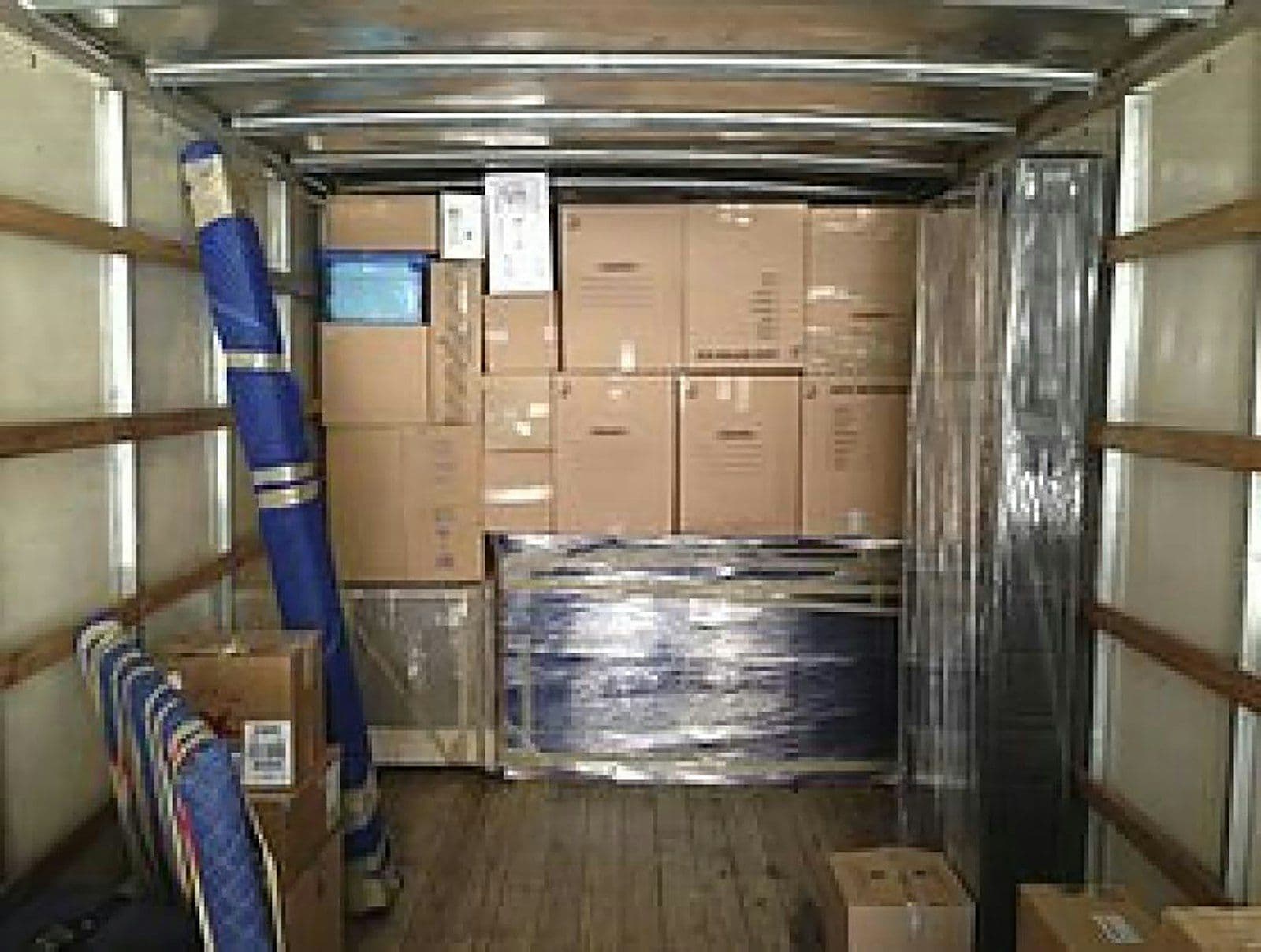
If you plan tours or ship freight, the answer that matters is not the number on the side of the trailer. A "53-foot" dry van gives you roughly 52 feet 6 inches of interior length, 98 to 100 inches of width, and 108 to 110 inches of height. That works out to about 3,800 to 4,000 cubic feet of usable space, enough for 26 standard pallets loaded straight, up to 30 if you turn them, or roughly 150 or more standard road cases if you pack tight and stack three high. Here is where each of those numbers comes from.
What are the interior dimensions of a 53-foot trailer?
The 53-foot figure is nominal. Inside, the walls, doors, and floor structure eat a little of it. Typical interior specs for a modern dry van are 52 feet 5 to 6 inches of length, 99 to 100 inches of width, and 9 feet to 9 feet 2 inches of height, with newer composite-wall trailers sometimes reaching 101 inches of width. Carrier ATS puts usable width at 98 to 100 inches, with 100 inches being the most common, and height at 108 to 110 inches.
Two of those numbers do most of the work in load planning: the width (because it decides whether two of something fit side by side) and the door height (because the opening is usually a few inches shorter than the ceiling). Always plan against the specific trailer you booked, not the category average.
How many cubic feet is a 53-foot trailer?
Multiply the interior dimensions out and you get a theoretical volume in the low 4,000s. In practice, most sources land on roughly 3,800 to 4,000 cubic feet of usable capacity once you account for real-world clearances; freight brokers commonly quote approximately 3,800 cubic feet as the working number.
How many pallets fit in a 53-foot trailer?
For standard 48x40 inch GMA pallets, the counts are well established:
- Straight loaded: 26 pallets, two rows of 13 with every pallet facing the same way. This is the 13-positions-long, 2-wide layout most shippers default to.
- Pinwheeled: 28 pallets, alternating orientation so pairs nest together.
- Turned sideways: up to 30 pallets, loading every pallet with the 40-inch side facing forward. This only works in trailers wide enough to take two 48-inch dimensions across, and it slows loading.
Double-stacking can push a load toward 52 pallets if the freight tolerates it and you stay under weight.
What runs out first, weight or space?
A 53-foot dry van carries between 42,000 and 45,000 pounds of cargo depending on the trailer's own weight and the 80,000-pound gross limit. Dense freight (beverages, steel, printed material) hits the weight ceiling with cube to spare. Touring gear almost never does; production loads cube out long before they weigh out, which is why the geometry matters more than the scale ticket.
How many road cases fit in a 53-foot trailer?
Touring cases are built to "truck pack" widths based on a 90-inch trailer: half packs at 45 inches wide, third packs at 30, quarter packs at 22.5, so full rows always add up across the truck. A standard half-pack trunk runs about 45 inches wide, 22 inches deep, and 30 inches tall, and each holds nearly 12 cubic feet of gear.
Run the math against the interior dims above. Two half packs side by side use 90 of your 98-plus inches of width. At 22 to 24 inches of depth per row, a 630-inch floor gives you 26 to 28 rows, or 52 to 56 half packs on the deck. With 108 inches or more of ceiling, three 30-inch trunks stack with room to spare, which puts the theoretical ceiling around 150 to 168 half-pack trunks in one 53-footer. No real tour hits that number: dog houses, amp racks, carpet rolls, ramps, and case lids that will not stack all steal rows, and the load has to come off in reverse show order. But it frames the budget: a full arena package fits in fewer trucks than most people guess, and a sloppy pack wastes a truck faster than anything else on the tour.
Model the load before you book the truck
The counts above are the boundaries. Whether your specific pack fits is a geometry problem, and it is cheaper to solve on a screen than on a dock at 2 a.m. Truck Packer lets you build the trailer at its real interior dimensions, drop in your actual cases, and see in 3D whether you are a one-truck or two-truck tour before anyone signs a carrier agreement. Ten minutes of modeling beats an hour of re-packing with the crew on the clock.
Put it to work: log in to Truck Packer and build your load plan.

