Dry Van vs Reefer vs Flatbed vs Step Deck: Pick by Cargo
A broker offers a 53-footer and nothing else. Here is how dry van, reefer, flatbed, and step deck actually differ, with real interior dimensions, deck heights, legal cargo-height limits, and the reefer cost premium, so you pick the trailer by your cargo instead of the first rate quoted.

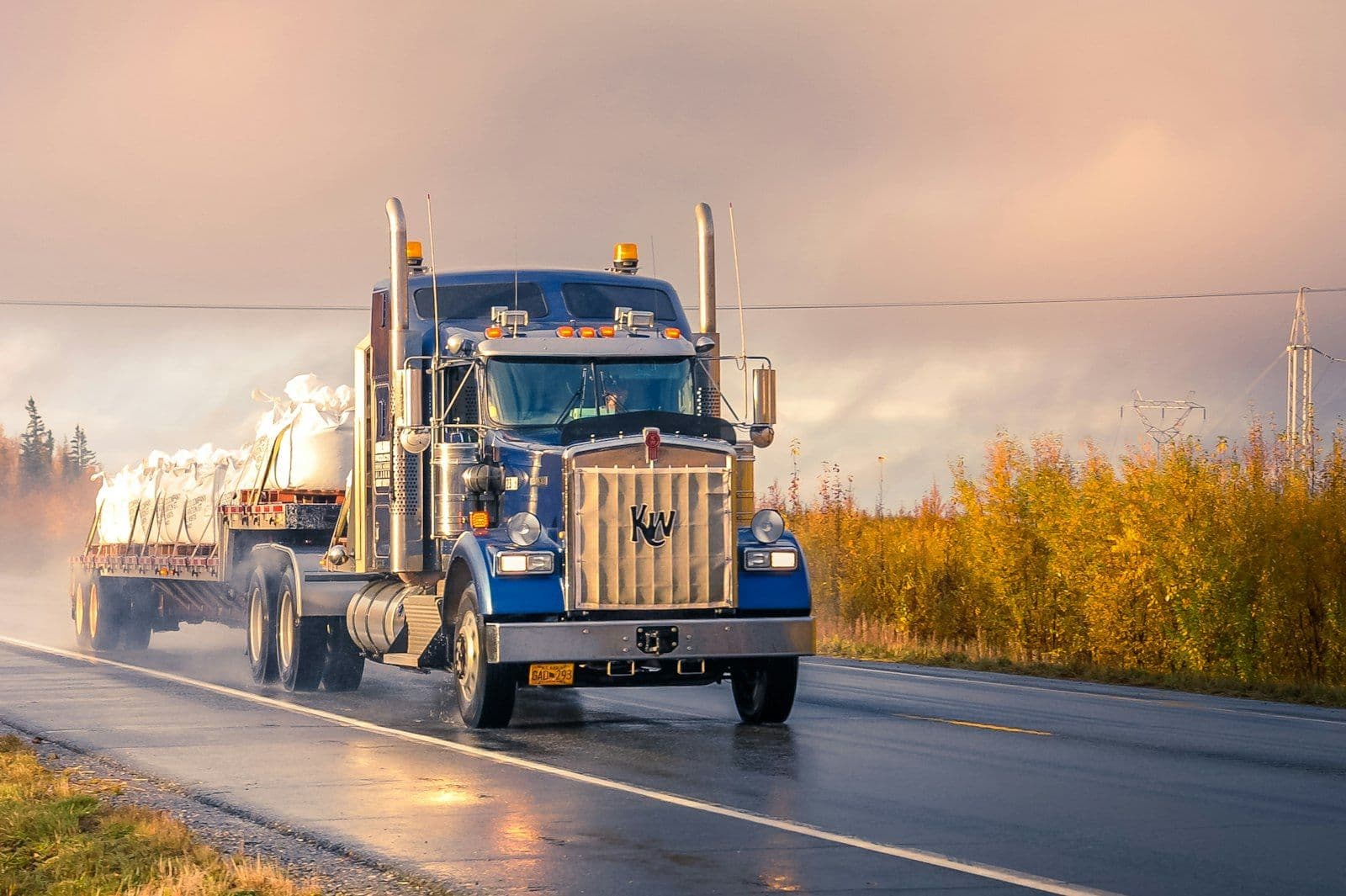
A broker calls and offers you "a 53-footer." That tells you almost nothing. A 53-foot dry van, a 53-foot reefer, a flatbed, and a step deck are four very different boxes, and the one you accept decides whether your cargo fits, stays intact, and clears every overpass between the dock and the venue. Pick the trailer by what you are hauling, not by the first rate you are quoted.
Here is how the four common trailer types actually differ, with real dimensions, and when each one is the right call.
Dry van: the default box
A dry van is the enclosed, weatherproof trailer most freight rides in. A standard 53-foot van gives you roughly 52.5 feet of length, 100 inches of interior width, and 110 inches (9 feet 2 inches) of interior height, with a 102-inch door opening. That door height matters more than people expect: your cargo has to physically clear 102 inches to get inside, even if the ceiling is taller.
Use a dry van when your gear is palletized, crated, or cased and needs protection from weather and theft but not temperature control. For touring production, staging, and general logistics, this is the workhorse. If you are building a load plan, the constraint to model is that 102-inch door and the 100-inch usable width, not the nominal length.
Reefer: pay for the climate, lose a little room
A reefer is a dry van with an insulated shell and a refrigeration unit. That insulation eats into the interior. Compared to a dry van, a reefer runs about 98 inches wide and only 96 to 98 inches tall inside, so you give up roughly a foot of height and a couple inches of width to the walls and the cooling equipment.
What you buy back is control. A reefer holds setpoints across a wide band, roughly minus 20°F to plus 65°F depending on the commodity: around minus 20°F for ice cream, 28 to 32°F for fresh meat, 32 to 40°F for produce.
That capability is not free. Reefer freight typically pays 15 to 20 percent more per mile than dry van, with 2026 spot rates around $2.80 to $3.10 versus $2.30 to $2.60 for a van. (You will sometimes see a wider premium quoted during produce season, when reefer demand spikes.)
Use a reefer when the load is temperature-sensitive, full stop. Do not book one just because it was offered. You are paying a real premium for a smaller box.
Flatbed: open deck, hard height ceiling
A flatbed is an open platform with no walls or roof, loaded and secured from the sides and top. Standard length is around 48 feet at 102 inches wide, and the deck sits roughly 60 to 62 inches off the ground, which leaves about 8 feet 4 inches to 8 feet 6 inches of legal cargo height before you need oversize permits.
Use a flatbed when the load is tall, wide, oddly shaped, or needs crane or forklift access from any side: machinery, building materials, large crated equipment. The tradeoff is exposure, tarping, and strap work, plus that hard height ceiling from a deck that starts five feet up.
Step deck: the same freight, taller
A step deck (drop deck) solves the flatbed height problem by dropping the main deck down behind the tractor. On the same ilscompany data, the step deck's main deck sits about 120 inches lower relative to a flatbed's cargo ceiling because the deck itself drops close to the road, which is why it is spec'd for "units that are too high for a standard flatbed."
In practice, the lower deck sits around 3.5 feet off the ground instead of the flatbed's 5 feet. That extra clearance lets you legally carry cargo close to 10 feet tall on most highways without a permit, versus the flatbed's 8-foot-6 limit.
Use a step deck when your load is flatbed-style (open, side-loaded) but too tall to clear legally on a standard deck. The extra roughly 18 to 20 inches of legal height is the entire point.
The quick decision
- Needs a controlled temperature? Reefer. Nothing else does it.
- Fits inside and just needs protection? Dry van. Cheapest and simplest.
- Too tall, wide, or awkward for a box, and under about 8-foot-6? Flatbed.
- Flatbed-style but taller than 8-foot-6? Step deck.
The dimensions are the decision. Before you accept any trailer, put your real cargo numbers against that trailer's real interior or deck limits.
That last step is exactly what load planning tools like Truck Packer are for: model your actual cases and gear against the true interior width, door height, and deck height of the specific trailer on offer, so "a 53-footer" turns into a plan that fits instead of a surprise at the dock.
Put it to work: log in to Truck Packer and build your load plan.

