Why We're Building Cargo Measure: LIDAR Scanning for the Touring Industry's Road Cases
Backline Logic is building Cargo Measure, a LIDAR-powered measurement app that scans road cases with an iPhone Pro and feeds the dimensions straight into Truck Packer. Here's why we're building it and what it changes for touring crews.

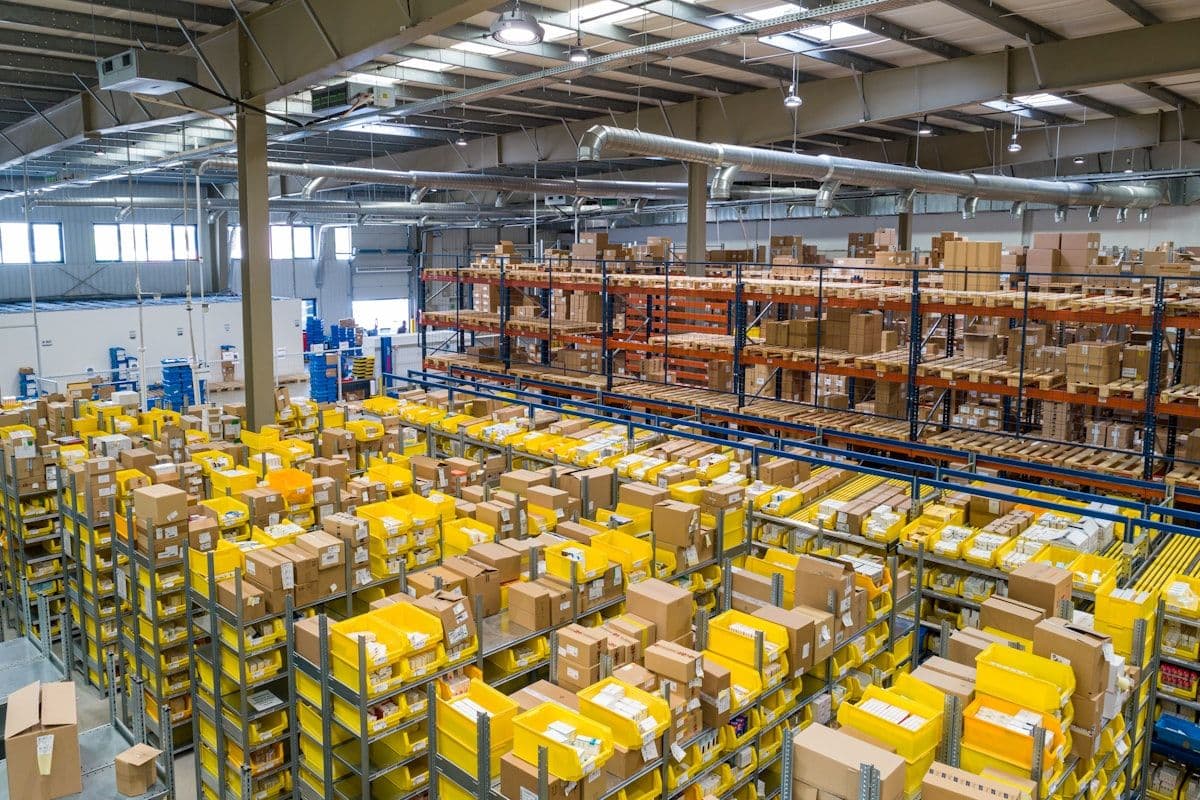
Every tour has the same conversation. We're sitting in the production office two weeks out, the truck pack from last leg won't work for this leg, and somebody — usually the PM, sometimes the truck packer, sometimes the lighting crew chief — pulls up a spreadsheet and starts asking the same question over and over: what are the actual dimensions of that case?
Not the dimensions on the spec sheet. The actual dimensions. The case that came back from the shop with a beefier wheel chassis and added an inch and a half to its height. The amp rack that lost its lid in Belgium and now ships in a different anvil. The custom carpet trunk that nobody on the current crew built and nobody can find the drawing for.
Somebody walks out to the warehouse with a tape measure. They measure. They text the numbers back. Half the time the numbers are wrong. The other half they're recorded in a notebook nobody else can find. By the time we're loading trucks, we're estimating — and estimating is how you end up with a piece of pre-rig truss that won't make the turn around the wheel well.
This is the problem we're building Cargo Measure to solve.
What Cargo Measure is
Cargo Measure is a LIDAR-based measurement app, currently in development at Backline Logic, that uses the LIDAR sensor built into iPhone Pro and iPad Pro models to scan a road case (or amp rack, or carpet trunk, or anvil case, or anything else with corners) and give you accurate length, width, and height in a few seconds. No tape measure. No "hold the end of this against the wall, would you?" No transcription errors into a spreadsheet that lives on somebody's phone.
Then — and this is the part we actually care about — those dimensions sync directly into Truck Packer as a new case type. You scan the case in the warehouse, switch to Truck Packer on the same device, and the case is already there, sized correctly, ready to drop into a pack.
We've been measuring cases the same way for forty years. It's about time that changed.
Why LIDAR is finally accurate enough
A reasonable question to ask is: can a phone actually measure a case accurately enough that you'd trust it for truck packing?
Five years ago the answer was no. Today it is unambiguously yes. Apple's RoomPlan API, which sits on top of ARKit and the device's LIDAR sensor, has been validated in independent studies as measuring within roughly 1.5% error on indoor distances — that's about half an inch on a 24-inch case (see this validation study on LIDAR handheld scanner accuracy). For a tape-and-stagehand baseline, that's better than what you actually get on most tours. The error budget on a hand measurement after fourteen days of double-show advances is, in our experience, more like 2 to 3 inches. The phone wins.
The accuracy ceiling has also kept rising. Each new generation of iPhone Pro and iPad Pro has shipped with refined LIDAR optics and a faster Neural Engine to clean the resulting point cloud, and Apple's RoomPlan SDK has had iterative accuracy improvements with every iOS release (Apple Developer overview). When we started prototyping Cargo Measure last year, the math already worked. We're now spending most of our development time on workflow, not on whether the sensor can do the job.
The actual workflow we're chasing
Cargo Measure isn't trying to be a CAD program. We have zero interest in producing photorealistic 3D models of your gear for the sake of producing photorealistic 3D models of your gear. The workflow we want looks like this:
A new case shows up at the shop. The carpenter is wrapping the corners. Before it goes in the rack pile, somebody on the warehouse crew opens Cargo Measure, points the phone at the case, taps Scan. Three seconds later the app says: 47.0 in × 22.5 in × 26.5 in, weight estimate 162 lb (computed from a known density curve and the volume), label CASE-OPS-238. That record syncs into the company's Truck Packer account. The next time anyone is building a pack and types 238, it's there.
If the case is a standard size — a typical large cable trunk is 44.5 × 22.5 × 24 external, a baseline that's been consistent across road case manufacturers for years (reference) — Cargo Measure can match it against a known template and pre-fill the metadata. You're not naming every case from scratch.
And, this is the important part: you don't need the carpenter or the PM to do this. You need a stagehand and a phone. Anyone can scan.
Where this fits with Truck Packer
Truck Packer is our 3D load-planning tool. Visual, drag-and-drop, you build a truck pack on screen and you can share it as a link with the load crew so the loader knows what goes where without having to print a manifest at 4 a.m. Today, the case dimensions in Truck Packer come from one of three places: you typed them in, you imported them from your inventory system (Flex, Rentman, or a CSV), or you accepted a default for a known stock case.
That works. But it has a gap. The gap is the case the rental house added to your show last week, the case the carpenter modified yesterday, the case that came back from the road different from how it left. Inventory systems lag. Truck packs get built against whatever inventory thinks is true today, not against whatever rolled in the back door an hour ago.
Cargo Measure is the bridge across that gap. Scan the case, get the dimensions in the load plan, build the pack against reality.
Why we're doing this in-house
There are plenty of third-party LIDAR measurement apps for iPhone. We've tried most of them. The reason none of them solves our problem is that none of them was built for road cases or touring workflows. They scan rooms, or furniture, or human bodies. They want to export to Revit, or SketchUp, or a printer. They don't know what a CASE-OPS designation is, they have no concept of a sub-rental, and they don't care whether a case is going on a 53-foot Kentucky tonight.
We do. Backline Logic builds for the live event industry, full stop. Cargo Measure is being designed so a tour carpenter can use it gloves-on in a warehouse with the door open and a forklift beeping ten feet away. The UI is one-handed. The export is into Truck Packer. The case naming follows the conventions the industry actually uses.
Where we are right now
Cargo Measure is in development. We've been testing internal builds against gear at a couple of partner shops since the start of the year, and the accuracy and speed are where they need to be. What we're refining now is the rough-handling case: scanning in low light, scanning with the lid of the case open, scanning a case stacked against three others, scanning when the phone is moving because the warehouse is moving. The lab numbers are great. The truck dock numbers need to be just as good.
We expect to open early access to a small group of touring production companies and rental shops later this year. If you want to be on that list — and especially if you have a warehouse full of weird custom anvil cases nobody's ever measured properly — let us know.
What it changes
The pitch isn't that Cargo Measure saves you ten minutes on a measurement. It does, but ten minutes isn't the point.
The pitch is that, for the first time, the dimensional reality of your gear can match the dimensional reality of your load plan — without anyone manually transcribing a number from a tape measure into a spreadsheet. The case in the warehouse, the case in Truck Packer, and the case on the truck are the same case, with the same dimensions, recorded the same way, by the same tool. The tape measure is downstream of human attention. LIDAR isn't.
Touring is going to keep getting faster, leaner, and more complicated. Festival routings are tighter. Rental houses are stretched. Sub-rental gear shows up at the venue with no documentation. The crew you have on this leg isn't the crew you had on the last one. The only way to keep load plans accurate under that pressure is to take the human attention out of the measurement loop and let the sensor do it.
Cargo Measure is how we're doing that.
Ready to build your load plan? Log in to Truck Packer and pack it.

