Box Truck vs Sprinter vs Trailer (What’s Best for Touring Gear?)
Choosing between a box truck, sprinter van, or trailer for touring? Here’s a practical logistics comparison for real-world gear moves.

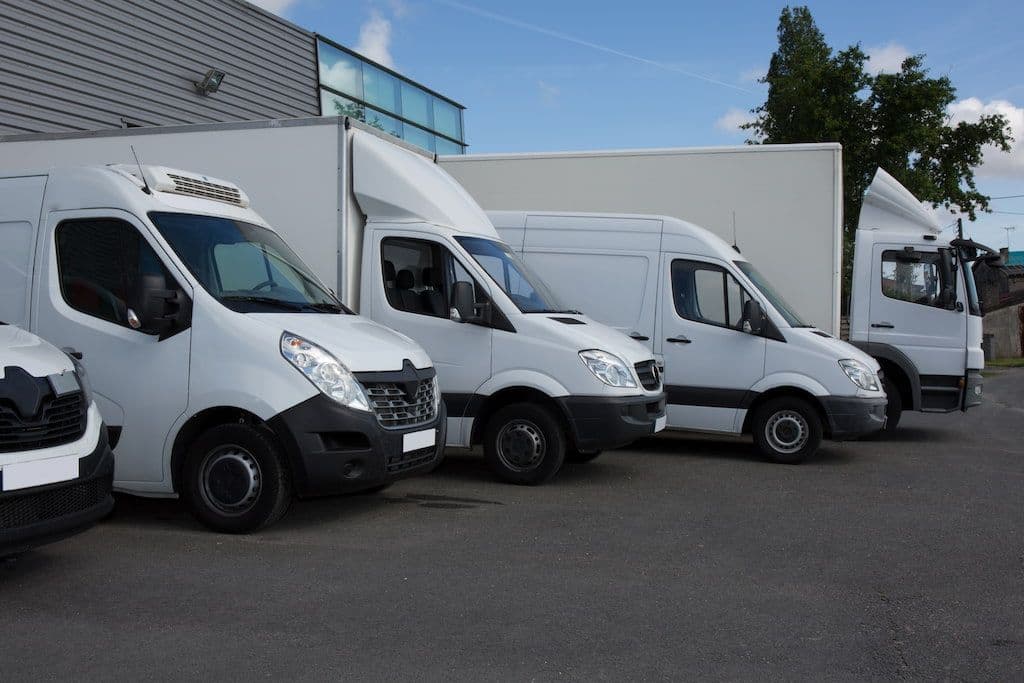
The "best" touring vehicle isn't a vibe. It's a math problem with parking, load-in doors, and how much suffering you can tolerate.
Every tour I've worked, someone has an opinion about what you should be rolling in. Sprinter guys swear by Sprinters. Trailer guys love the flexibility. Box truck people just want to park and unload. They're all right — and they're all wrong — because the answer depends on your specific routing, your crew size, and how many times you're willing to back a 16-foot trailer down a one-way alley in Brooklyn.
Here's how to actually think about it.
Sprinter Van
Best for: Small rigs, tight city routing, quick in-and-out loads.
A Sprinter is the path of least resistance for a lean tour. You can park almost anywhere, you don't need a CDL, and you're not burning diesel like a box truck. For a band running IEMs, a console, and a few pedalboards, this is often the move.
The trade-offs: Cubic space is limited, and it's shockingly easy to overload one. Once you're playing Tetris with cases at 2 AM, the "simplicity" of a van disappears fast. Weight distribution matters more than people think — a poorly packed Sprinter handles worse than a well-packed trailer.
Trailer (Pulled)
Best for: Budget-conscious tours and rigs that need flexible sizing.
Trailers give you options. You can scale up or down depending on the run, and the upfront cost is lower than a dedicated box truck. For a regional tour or a support slot where you're not carrying full production, a trailer can make a lot of sense.
The trade-offs: Backing and parking can be brutal, especially at downtown venues with tight load-in access. Weight distribution isn't optional — it's safety-critical. And if your tow vehicle isn't rated for what you're pulling, you're one hard brake away from a very bad day.
Box Truck
Best for: Medium-to-large rigs, predictable pack, faster load-in.
A box truck gives you a flat floor, vertical walls, and a liftgate. That means your pack is repeatable, your cases don't shift, and load-in is faster because you're not crawling into a van or unhitching a trailer. For tours carrying lighting, backline, and merch, this is usually where you land.
The trade-offs: Dock access and height restrictions are real — not every venue can accommodate a 12'6" truck. Cost is higher (rental, fuel, insurance), and depending on the size, you may need a driver with a CDL or DOT compliance.
The Decision Checklist
Before you pick a vehicle, run through these questions honestly:
What are your typical venue access constraints? If you're playing a lot of clubs with alley load-ins and street parking, a Sprinter or small trailer wins. If you're doing theaters and arenas with loading docks, a box truck is the obvious choice.
Do you have a dedicated driver? A box truck usually means someone's only job is driving. If your guitarist is also your driver, that changes the calculus.
How often do you play downtown or hard-parking venues? Frequency matters. One rough load-in is survivable. Fifteen in a row will break your crew.
What's your load-in crew size? A two-person crew in a box truck with a liftgate can move faster than a four-person crew wrestling cases out of a packed trailer. Equipment matters as much as headcount.
The Hidden Killer: Inconsistency
Here's what nobody talks about enough — if your pack changes every day, any vehicle becomes a problem.
It doesn't matter if you're in a perfectly sized box truck. If the cases go in differently every night, you're slower, you're risking damage, and your crew is burning energy on a puzzle instead of on the show. The vehicle is just the container. The pack is the system. Get the system right first, then pick the container that fits it.
FAQ
Is a trailer cheaper than a box truck for touring? Usually, yes — on paper. The rental and fuel costs are lower. But the true cost shows up in parking time, risk, and labor. If your crew spends an extra 30 minutes per load-in dealing with a trailer, multiply that by 25 shows and ask yourself what that time is worth.
What's the safest option for gear? A consistent pack in a properly strapped box truck is generally the most stable setup. Flat floor, e-track, ratchet straps, and cases that go in the same way every night. That said, any vehicle is safe if the pack is intentional and secured. The danger isn't the vehicle — it's the "just throw it in, we'll figure it out" mentality.
Keep Reading
- Truck pack weight distribution basics
- How to label cases so anyone can load
Pack Smarter, Not Harder
The vehicle is only half the equation. The other half is knowing your pack is consistent, safe, and repeatable — even when the vehicle changes, the crew rotates, or you're loading in at midnight after a 400-mile drive.
Truck Packer helps you keep the pack consistent even when everything else changes. Map your cases, plan your load, and hand anyone a blueprint that works.
Stop reading, start packing: log in to Truck Packer and lay out your trailer.

