Beyond the Tour Bus: Why 3D Load Planning Isn't Just for Concerts Anymore
3D load planning started in touring and live events, but movers, trade show companies, and freight brokers are discovering it solves the same expensive problem: wasted truck space.

Truck Packer was born in the back of a tour bus. The original problem was simple: a production manager staring at a 53-foot trailer, a pull sheet with 47 road cases, and a load-in time that wasn't going to move. The gear had to fit, it had to come out in the right order, and there wasn't time to play Tetris on the dock.
That's still the core of what we do. But something interesting has been happening over the past year: people who have never loaded a single road case of pre-rig truss or a rack of dimmer beach are signing up. Moving companies. Trade show logistics firms. Freight consolidators. Military logistics planners. They're all running into the same wall — and they're finding that a tool built for the chaos of touring production translates surprisingly well to their world.
The Load Planning Gap Is Universal
Here's a stat that should bother everyone in logistics: the average truck in the United States runs at roughly 70-75% capacity utilization. That means a quarter of the trailer space on every truck rolling down the highway is empty air. Across an industry moving $940 billion in freight annually, that wasted space adds up to tens of billions in inefficiency — extra trucks, extra fuel, extra drivers, extra emissions.
The reason? Most load planning still happens in someone's head. A warehouse manager eyeballs the stack, a driver backs up to the dock, and they figure it out. Maybe there's a spreadsheet. Maybe there's a whiteboard sketch. But for the vast majority of shipments — from a family's household goods to a convention center's worth of booth materials — the "plan" is tribal knowledge and best guesses.
In touring production, we solved this problem out of necessity. When you're loading a trailer at 6 AM in a parking lot in Memphis and the gear has to come off in reverse order for a festival stage build at 2 PM in Dallas, you can't afford guesswork. The load plan is the show. So the AVL industry developed tools, processes, and a culture around pre-planning every cubic foot of truck space.
That discipline is exactly what other industries are starting to adopt.
Moving Companies: A $23 Billion Industry Still Using Clipboard Estimates
The US moving services market hit $23.4 billion in 2026, with over 9,100 companies competing for business. Full-service relocations — where the mover handles packing, loading, transport, and unpacking — account for 64% of the market. These are complex, high-touch jobs where the difference between one truck and two trucks can mean thousands of dollars in margin.
Yet most moving companies still estimate truck space the same way they did in 1995: a salesperson walks through the home, eyeballs the furniture, and writes down a cubic footage number on a clipboard. According to MoversTech CRM's 2026 industry report, more than 70% of US moving companies now use some form of digital tools — but those tools are mostly CRM systems, GPS tracking, and virtual surveys. The actual load planning step, deciding what goes where inside the truck, remains almost entirely analog.
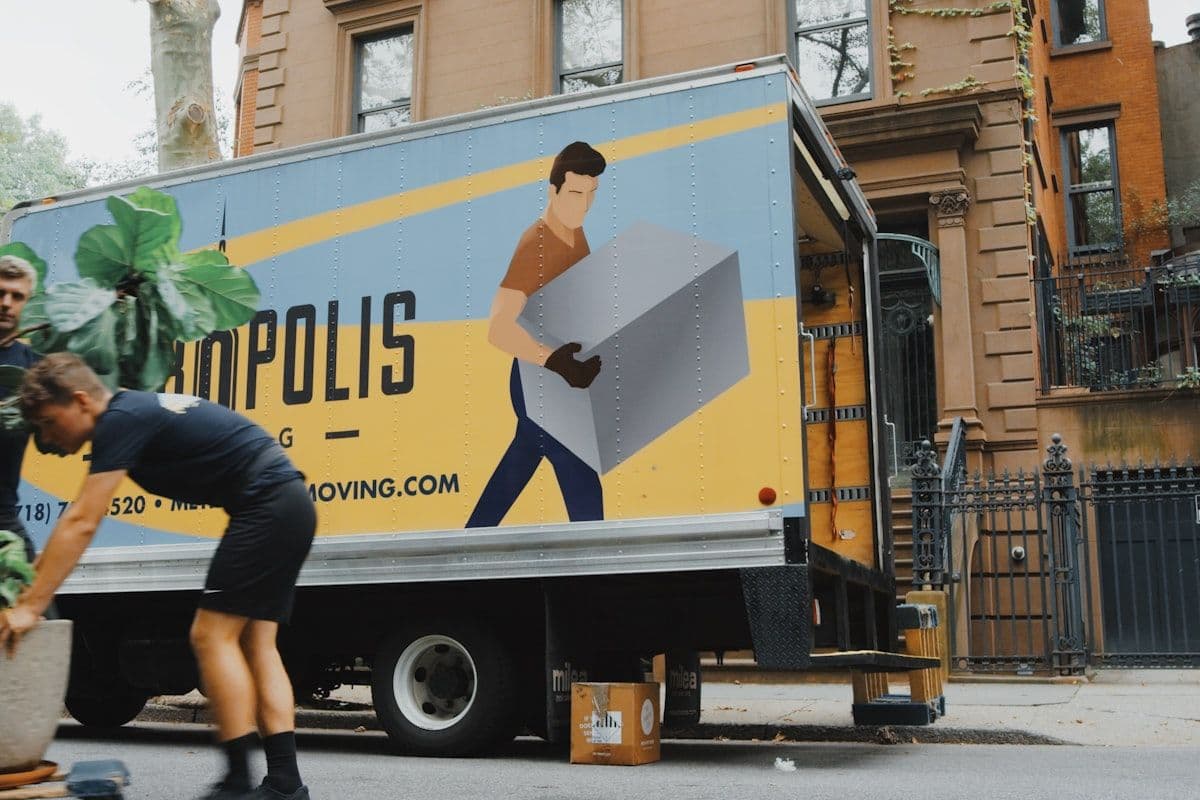
This is where the touring world's approach maps directly. A moving crew loading a 26-foot box truck with a family's belongings faces the same spatial puzzle as a stagehand loading a 53-foot trailer with lighting rig cases. Heavy items low, fragile items protected, access order considered, weight distribution balanced. The variables are the same — only the cargo changes.
The financial incentive is straightforward. If a moving company can accurately plan loads and avoid dispatching a second truck 15% of the time, that's 15% fewer truck-days of labor, fuel, and insurance across their annual volume. For a mid-size mover running 2,000 jobs a year, that's 300 avoided second-truck dispatches. At $800-1,200 per truck-day, the math gets compelling fast.
Some forward-thinking movers are even exploring digital twin technology — creating virtual replicas of the home and destination to simulate the entire relocation before a single box is packed. 3D load planning slots naturally into that workflow as the bridge between the virtual survey and the physical truck.
Trade Show Logistics: Where Every Square Foot Costs Real Money
If you've ever worked a trade show install, you know the drill: a dozen vendors converging on a convention center loading dock at the same time, each with different booth components, display cases, AV equipment, and branded materials. The dock has time slots. The freight elevator has weight limits. The show floor has strict move-in windows. Miss yours, and you're setting up at midnight.
Trade show logistics companies face a particularly nasty version of the load planning problem because they're often consolidating shipments from multiple exhibitors onto shared trucks. A single trailer might carry booth materials for six different companies, each with different handling requirements and different unload priorities based on their booth location in the hall. As Estes Forwarding Worldwide notes, the trade show shipping industry has struggled with staffing quality since the pandemic, with experienced logistics coordinators being replaced by people who don't yet fully understand the nuances of consolidated freight timing.
A visual load plan solves the institutional knowledge problem. When the experienced dock supervisor retires, the load plan doesn't walk out the door with them. New hires can look at a 3D visualization, understand what goes where, and execute the load without relying on someone else's memory of "how we always do it."
The LCL (less-than-container-load) market, which shares DNA with trade show consolidation, was valued at $107 billion in 2025 and is projected to reach $151 billion by 2032. As that market grows, the pressure to consolidate efficiently — to fit more shipments into fewer containers — makes visual planning tools less of a nice-to-have and more of a competitive requirement.
Freight Brokers and the Consolidation Puzzle
Freight brokers live and die by utilization. Their entire business model depends on matching available truck space with available cargo, and the margin between a profitable load and a money-losing one is often a matter of a few pallets. With continued M&A activity across global logistics in early 2026, smaller brokers are under pressure to match the operational efficiency of larger consolidated players.
The traditional approach to freight consolidation is essentially mathematical: you know the weight and pallet count, you calculate linear feet, and you book the truck. But pallets aren't all the same height. Some freight is stackable, some isn't. Some pieces are oddly shaped. The spreadsheet says it fits; the dock worker discovers it doesn't. The result is a rejected load, a delayed shipment, or an expensive partial that moves half-empty.
A 3D load planner changes that equation. Instead of calculating whether cargo fits in abstract linear-foot terms, you can see it. You can virtually stack, rotate, and position every piece before the truck even arrives at the dock. When you're quoting a multi-stop LTL route, you can show the shipper exactly how their freight will be positioned and protected — and you can prove that the consolidation actually works before committing the truck.
What Touring Taught Us That Applies Everywhere
There are a few principles from live production logistics that translate directly to every industry dealing with truck space:
Unload order matters as much as fit. In touring, the lighting truss has to come off first because it takes the longest to rig. The backline goes on last because it goes straight to the stage. Moving companies face the same logic: the items you need first at the destination (beds, kitchen essentials) should be last on the truck. Trade shows need vendor A's booth unloaded before vendor B's, based on floor position. Planning the load in 3D means planning the unload sequence at the same time.
Sharing the plan is as important as making it. In the AVL world, a production manager builds the truck pack and shares a link with the crew — the loaders can pull it up on their phone at the dock and see exactly where every case goes. That same shareable visual plan works for a moving crew lead, a trade show dock supervisor, or a freight broker's customer who wants proof their shipment will be handled properly. When the plan lives in someone's head, it dies when they clock out.
Weight distribution isn't optional. Tour trucks run heavy — a loaded 53-footer with lighting and audio gear can push 45,000 pounds. But DOT doesn't care if you're hauling pre-rig truss or living room furniture. Axle weight limits apply equally to every truck on the road. A 3D planner that accounts for weight distribution across axle groups prevents the same overweight citation whether you're a touring company or a household goods carrier.
Templates save hours on repeat routes. Tour production runs the same truck pack configuration for weeks or months on a run. A moving company doing corporate relocations for the same client loads similar office configurations repeatedly. Trade show logistics firms ship to the same convention centers with the same dock constraints every season. Building a template once and adjusting it per-load is exponentially faster than starting from scratch.
The Technology Is Finally Accessible
Five years ago, 3D load planning software was either enterprise-grade (read: six-figure contracts and months of implementation) or it was a clunky desktop app that nobody wanted to use. The reason touring and AVL adopted load planning earlier wasn't because they were more sophisticated — it was because the pain was more acute. When your truck pack fails, the show doesn't happen. The consequence is immediate and visible. In moving or freight, the consequence is diffused: a little wasted space here, an extra truck there, a margin squeeze that shows up in quarterly numbers but not on the dock.
What's changed is accessibility. Web-based tools like Truck Packer run in a browser, work on mobile, and don't require a logistics PhD to operate. You can build a 3D load plan, share it with a link, and have your dock crew executing against it in minutes. The barrier to entry that kept smaller operators on clipboards and spreadsheets has effectively disappeared.
And for companies that want to integrate load planning into their existing workflows, APIs make it possible to push inventory data straight from a warehouse management system or CRM into a load planner — no manual re-entry, no transcription errors, no lost dimensions.
The Same Problem, Different Cargo
The throughline here isn't complicated. Whether you're loading a trailer with L-Acoustics line array cases for a stadium tour, a family's furniture for a cross-country move, six exhibitors' booth materials for a trade show, or mixed pallets for an LTL consolidation run — you're solving the same spatial optimization problem. You have a fixed volume of truck space, a variable set of cargo, constraints around weight and access order, and a need to communicate the plan to the people doing the physical work.
The touring and live events industry just happened to get there first because the consequences of bad load planning were so immediate. Now the rest of the logistics world is catching up — and the tools are ready for them.
If you're in any of these industries and you've been planning loads on paper, in spreadsheets, or in your head — it might be time to try building a pack visually. The problem you're solving isn't new. The tools just finally caught up.
Ready to build your load plan? Log in to Truck Packer and pack it.

