20ft vs 40ft Shipping Containers: Which One Should You Use?
Avoid paying thousand in extra on shipping costs by not understanding key differences in container types.

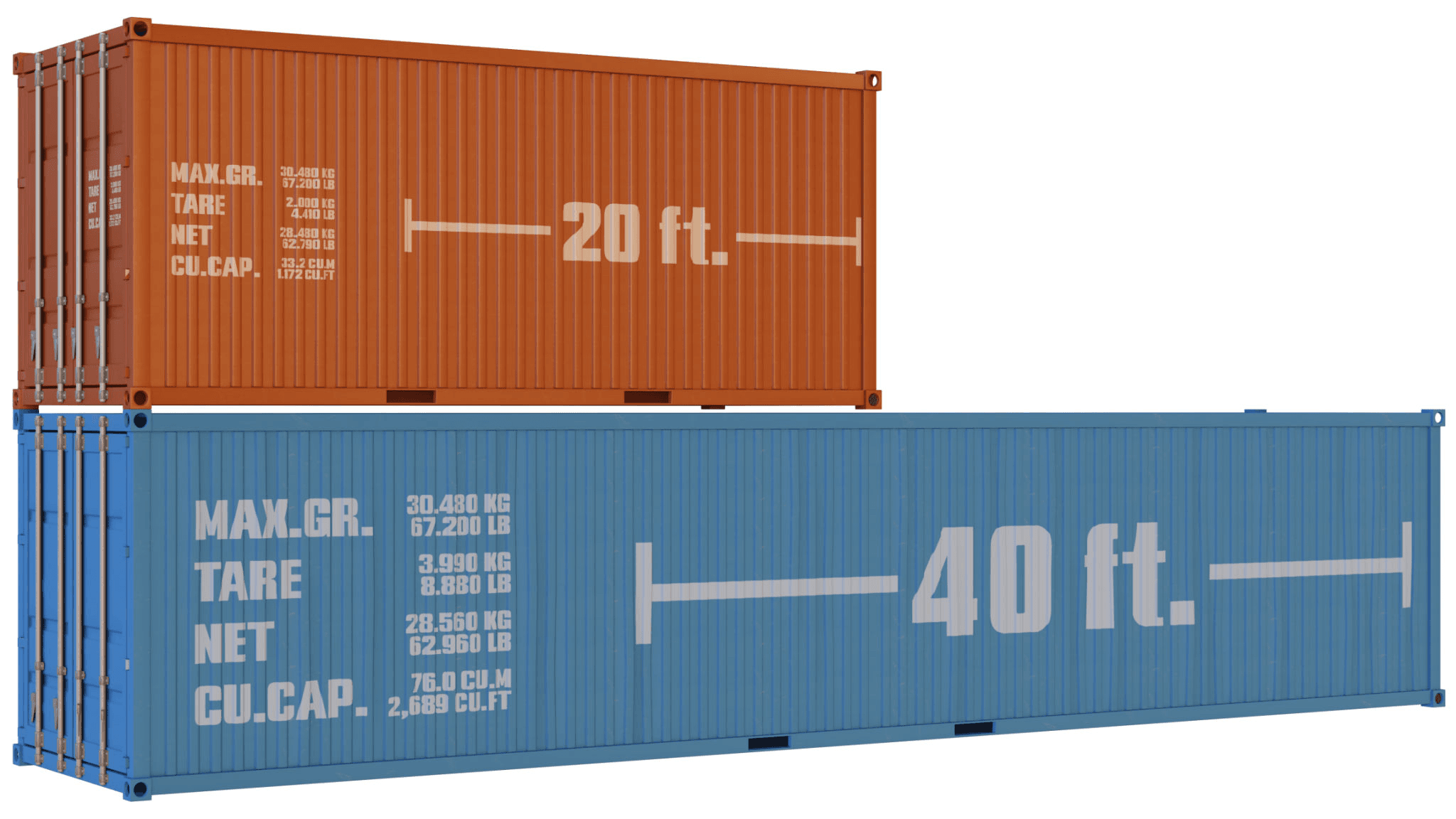
20ft vs 40ft Shipping Containers: Which One Should You Use?
Choosing between a 20ft and 40ft shipping container sounds simple; one is twice as long, so it must be better, right?
Not exactly.
In real-world logistics, container choice affects cost per cubic foot, weight limits, load efficiency, and even whether your shipment survives transit without damage. This guide breaks down the differences so you can choose the right container, not just the bigger one.
Quick Comparison: 20ft vs 40ft Containers
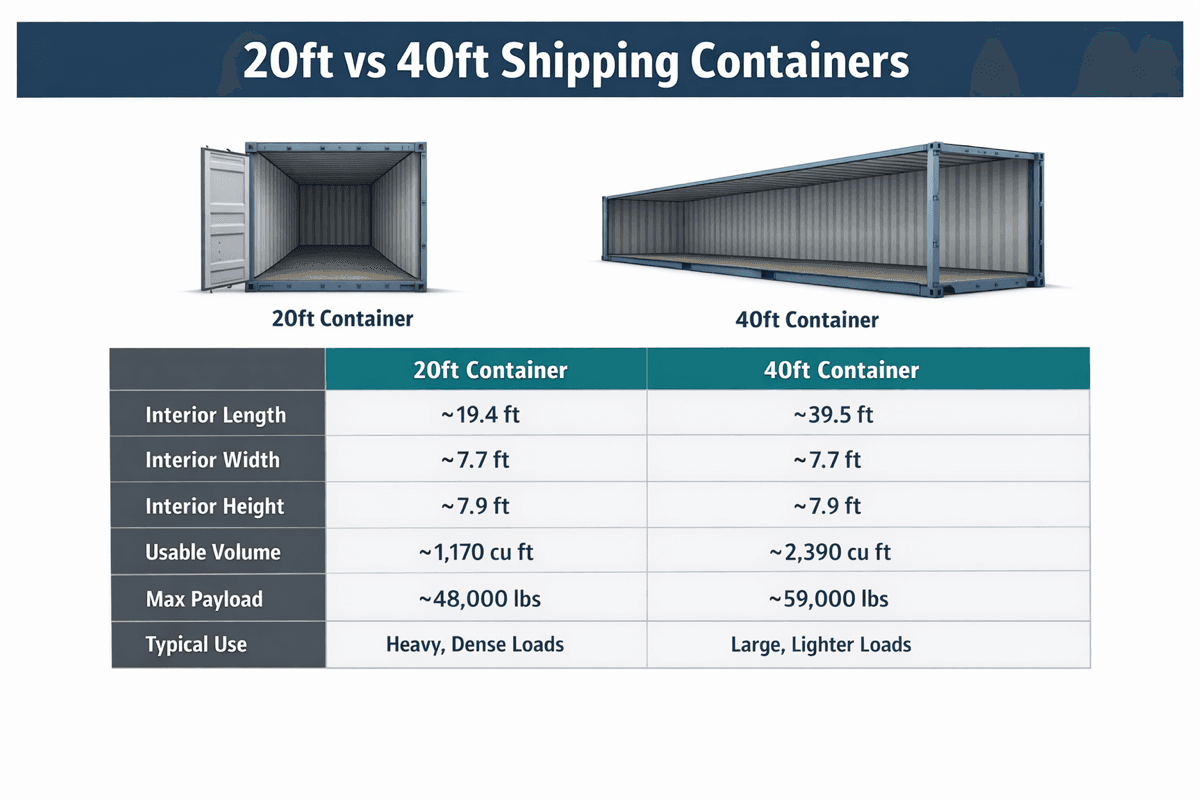
Key takeaway: Volume doubles, but weight capacity does not.
Use a 20ft container when:
- Your cargo is dense or heavy
- You’ll hit weight limits before volume limits
- You want easier weight distribution
- You’re shipping machinery, cases, or stacked road gear
Because weight is concentrated over a shorter footprint, 20ft containers are more forgiving for axle limits and crane handling, especially in rail and port environments.
Common mistake: Choosing a 40ft container for heavy freight and discovering you can only load half of it.
When a 40ft Container Actually Wins
The 40ft container is about efficiency through volume, not brute strength.
Use a 40ft container when:
- Your cargo is bulky but relatively light
- You’re shipping pallets, soft goods, or large case counts
- You can fully utilize the length without leaving dead space
- You want lower cost per cubic foot
If you load it well (we might know an App for that ;), a 40ft container can dramatically reduce cost per unit shipped.
Hidden risk: Poor load planning leads to unused space that you still pay for.
Weight vs Volume: The Real Decision Factor
Here’s where most container decisions go wrong.
- 20ft containers are often weight-limited
- 40ft containers are often space-limited
If your load plan doesn’t account for:
- Center of gravity
- Case orientation
- Stackability
- Real interior clearances (not brochure specs)
…you’ll either ship air or violate weight constraints.
This is why spreadsheets and rough math fail so often at scale.
Interior Dimensions Matter More Than You Think
Published container dimensions are maximums, not guarantees.
Real usable space is reduced by:
- Corrugation depth
- Door hardware
- Floor ratings
- Load bars and dunnage
That missing inch here and there adds up, especially over 40 feet.
Cost Breakdown: Bigger Isn’t Always Cheaper
While 40ft containers usually cost less per cubic foot, they:
- Cost more to reposition empty
- Cost more to move if underfilled
- Can create inefficiencies in last-mile trucking
A well-packed 20ft container can outperform a poorly packed 40ft: both financially and operationally.
So… Which Container Should You Choose?
Ask these questions first:
- Will I hit weight limits before filling the space?
- Can my load be arranged to avoid dead zones?
- Do I need flexibility for mixed cargo types?
- Am I optimizing for cost per container or cost per usable cubic foot?
If you can’t confidently answer those, container selection becomes guesswork.
Why Load Planning Changes the Answer
The container itself isn’t the problem: the plan is.
Modern load-planning tools let you:
- Visualize how cargo fits before shipping
- Compare 20ft vs 40ft scenarios instantly
- Spot wasted space and weight imbalance
- Avoid costly re-packs at the dock
That’s the difference between choosing a container and choosing correctly.
Final Thought
A 40ft container isn’t “better” than a 20ft container.
It’s just less forgiving when you get it wrong.
Put it to work: log in to Truck Packer and build your load plan.

