A Complete Guide to Truck and Container Weight Limits by Country
For tour managers, production teams, and logistics professionals planning international tours or shipping production equipment

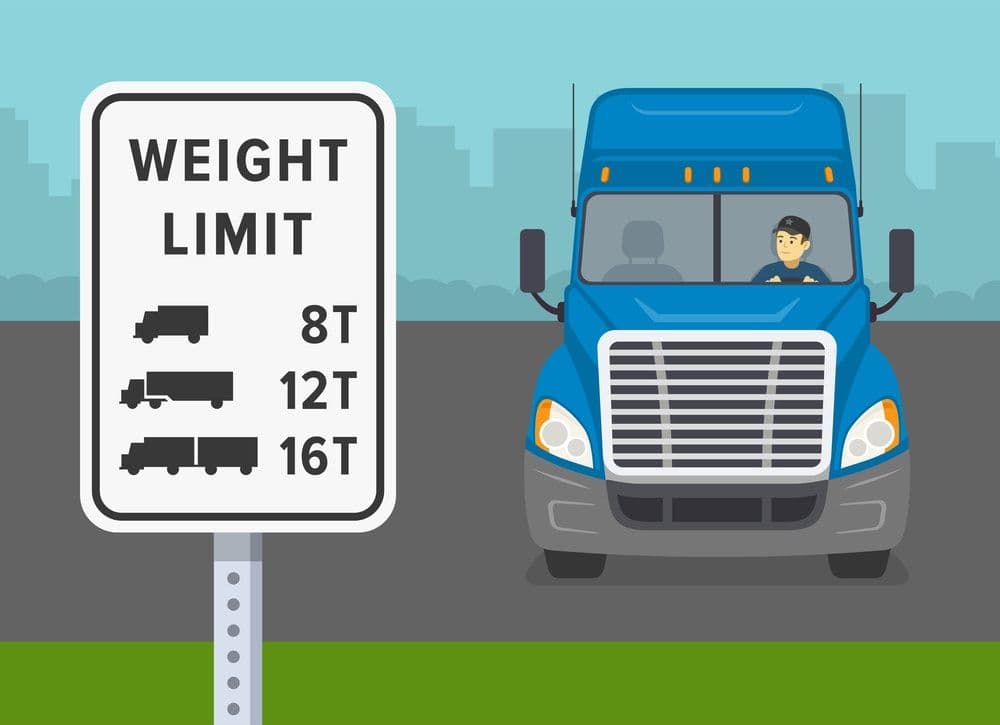
Planning international logistics for touring productions, live events, or equipment transport requires navigating a complex web of weight regulations that vary dramatically from country to country. Whether you're moving concert rigging across Europe, shipping production gear to Asia, or planning a North American tour, understanding these weight restrictions is crucial to avoiding costly delays, fines, and logistical nightmares.
This comprehensive guide breaks down the weight limits for trucks and shipping containers across major touring markets, helping you plan compliant loads from day one with TruckPacker's 3D load planning software.
Why Weight Restrictions Matter for Touring and Production Logistics
Weight limits aren't arbitrary numbers dreamed up by bureaucrats. They exist to protect road infrastructure, ensure safe handling, and create fair competition in transport. For production logistics, these limits directly impact:
- Load planning strategy: How you pack your truck determines whether you'll cross borders smoothly or face delays
- Equipment selection: Choosing between 20ft and 40ft containers can make the difference between a legal load and an overweight violation
- Route planning: Some roads have lower weight limits, affecting your travel options
- Budget planning: Overweight fines can reach thousands of dollars per violation
- Timeline reliability: Weight violations cause delays that can derail tour schedules
The challenge intensifies when crossing international borders, where a load that's perfectly legal in one country becomes overweight the moment you cross into another.
Understanding Container Weight Specifications
Before diving into country-specific regulations, let's establish the foundation: standard shipping container capacities that form the backbone of international equipment transport.
20-Foot Container Specifications
The 20ft container (Twenty-Foot Equivalent Unit or TEU) is ideal for smaller production packages or dense, heavy equipment:
- External dimensions: 6.06m L × 2.44m W × 2.59m H (19'10.5" × 8' × 8'6")
- Internal dimensions: 5.89m L × 2.35m W × 2.39m H (19'4" × 7'8.5" × 7'10")
- Internal volume: Approximately 33 cubic meters (1,172 cubic feet)
- Empty weight (tare): 2,080-2,300 kg (4,585-5,071 lbs)
- Maximum gross weight: 24,000-30,480 kg (52,910-67,200 lbs)
- Maximum payload capacity: 21,700-28,180 kg (47,840-62,129 lbs)
- Standard pallet capacity: 10-11 Euro pallets
40-Foot Container Specifications
The 40ft container (equals 2 TEUs) offers nearly double the space, making it cost-effective for larger production packages:
- External dimensions: 12.19m L × 2.44m W × 2.59m H (40' × 8' × 8'6")
- Internal dimensions: 12.02m L × 2.35m W × 2.39m H (39'5" × 7'8.5" × 7'10")
- Internal volume: Approximately 67 cubic meters (2,366 cubic feet)
- Empty weight (tare): 3,500-3,750 kg (7,716-8,268 lbs)
- Maximum gross weight: 30,480-32,500 kg (67,200-71,650 lbs)
- Maximum payload capacity: 26,730-29,000 kg (58,935-63,930 lbs)
- Standard pallet capacity: 20-24 Euro pallets
40-Foot High Cube Containers
For oversized production elements like truss, staging, or tall scenic pieces, high cube containers add crucial vertical space:
- External height: 2.90m (9'6") - one foot taller than standard
- Internal height: 2.70m (8'10")
- Additional volume: Approximately 76 cubic meters (2,676 cubic feet)
- Empty weight (tare): 3,900-4,400 kg (8,598-9,700 lbs)
- Maximum payload capacity: Similar to standard 40ft (around 26,000 kg)
Critical planning note: While containers have these theoretical maximum weights, the actual allowable weight for road transport is almost always lower due to truck weight restrictions in the destination country.
European Union Weight Regulations
Europe presents unique challenges for touring logistics due to varying national regulations within the broader EU framework. Council Directive 96/53/EC establishes baseline standards, but individual countries maintain their own rules.
Standard EU Limits
The baseline for most EU countries:
- Standard 5-axle combination (2-axle tractor + 3-axle semi-trailer): 40 tonnes (40,000 kg / 88,185 lbs)
- Single axle limit: 10 tonnes
- Tandem axle limit: 18-19 tonnes depending on configuration
- Driving axle limit: 11.5 tonnes
Country-Specific Variations
Germany
- Standard limit: 40 tonnes for typical combinations
- Long trucks ("Lang-Lkw"): Up to 25.25 meters and 60 tonnes on designated routes only
- Combined/intermodal transport: Up to 44 tonnes with special authorization
- Strict network restrictions for heavier vehicles
United Kingdom
- Standard combination: 40 tonnes
- 5+ axle configurations: Up to 44 tonnes
- Six-axle articulated vehicles: 44 tonnes maximum
- Note: Brexit may affect cross-channel transport regulations
Finland and Sweden
- Among Europe's most permissive regulations
- Combinations up to 25.25 meters and 60 tonnes allowed
- Designed for long-distance efficiency in remote regions
- Reduced per-trip environmental impact
Netherlands
- 5+ axle combinations: Up to 50 tonnes
- Progressive policies supporting longer, heavier vehicles on major routes
- Extensive designated route network
Belgium
- 4+ axle trucks: Maximum 44 tonnes
- 3-axle trucks: Maximum 26 tonnes
- Regional variations between Flanders, Wallonia, and Brussels
- Stricter urban limits to prevent road damage
France and Italy
- Generally adhere to standard 40-tonne EU limits
- Some domestic transport allowances for 44 tonnes
- Special permits available for oversized/overweight loads
Poland
- Single drive axle: 11.5 tonnes on public roads
- Road managers can impose local restrictions (10 tonnes or 8 tonnes) on specific sections
- Non-bituminous road surfaces: Limited to 8 tonnes per single drive axle
Spain
- Single drive axle: 11.5 tonnes
- Double axles: 16-20 tonnes depending on wheelbase
- Triple axles: 21-24 tonnes depending on configuration
Key Takeaway for European Tours
When planning a European tour, you must plan for the most restrictive country on your route. A load legal in Sweden (60 tonnes) may be significantly overweight in France (40 tonnes). TruckPacker's 3D load planning software helps you visualize weight distribution and ensure compliance across all destinations.
United States Weight Regulations
The United States presents its own complexity: federal baseline standards with significant state-by-state variations.
Federal Baseline Standards
The Federal Highway Administration establishes minimum standards all states must allow:
- Gross Vehicle Weight (GVW): 80,000 lbs (36,287 kg) on Interstate highways
- Single axle: 20,000 lbs (9,072 kg) maximum
- Tandem axle: 34,000 lbs (15,422 kg) maximum
- Federal Bridge Formula: Distributes weight across axles based on spacing to protect bridges
Container Weight Limits for U.S. Road Transport
Here's where container specs meet reality:
- 20ft container payload for U.S. trucking: Approximately 44,000 lbs (19,958 kg) when using standard tri-axle chassis
- 40ft container payload for U.S. trucking: Approximately 44,500 lbs (20,185 kg) on standard chassis
- Maximum over-the-road container weight: Approximately 59,000 lbs with heavyweight permits
Critical misconception: Steamship lines often cite 44,000 lbs as the maximum container weight, but many states allow significantly higher weights (54,000-59,000 lbs) with proper permits and equipment. Understanding these nuances can save major logistics costs.
State-by-State Variations
California
- Standard 5-axle: 80,000 lbs
- 6+ axles: Up to 86,000 lbs
- Specific axle weight limits to protect highway infrastructure
Texas
- Standard maximum: 80,000 lbs
- Designated highways with permits: Up to 90,000 lbs
- Formula-based calculations for axle spacing
New York
- 5+ axle vehicles: 80,000 lbs maximum
- Special permits available for overweight vehicles
- Seasonal restrictions during spring thaw periods
Michigan
- Among the most permissive U.S. states
- Can allow up to 164,000 lbs on designated routes with proper axle configuration
- Unique regulations due to automotive industry influence
Seasonal Weight Restrictions: "Frost Laws"
Northern U.S. states and Canadian provinces impose seasonal weight reductions during spring thaw periods when roadbeds are weakened by moisture:
- Typical reduction: Up to 35% of standard weight limits
- Affected states: Minnesota, Wisconsin, Michigan, North Dakota, and others
- Duration: Varies by state, typically March-May
- Impact: Can significantly affect tour routing during these months
Planning tip: Spring tours in northern regions require careful attention to frost law schedules. What's legal in February may be overweight in April on the same road.
Canada Weight Regulations
Canadian regulations date back to 1999 but include regional variations and seasonal adjustments.
Saskatchewan Example
- Tire-based calculations: Approximately 10 kg per millimeter of tire diameter
- 280mm tire: Can carry approximately 3 tonnes
- Class-specific limits: Vary by highway classification
Seasonal Variations
Canada implements winter weight allowances recognizing frozen ground provides additional support:
5-axle full trailer on Class I highways:
- Winter period (Nov 16 - Mar 14): 45.25 tonnes
- Non-winter season: 42.45 tonnes
6-axle full trailer:
- Winter period: 53.25 tonnes
- Non-winter season: 50.35 tonnes
This seasonal variation can actually be advantageous for winter tours, allowing heavier loads during colder months.
China and Asian Markets
China uses a structured approach based on axle configuration:
Axle-Based Weight Limits
For 32-foot cargo trucks:
- 3-axle: 27 tonnes maximum
- 4-axle: 29 tonnes maximum
- 5-axle: 30 tonnes maximum
- 6-axle: 32 tonnes maximum
- 7-axle: 35 tonnes maximum
General limits:
- Single-axle vehicles: 9 tonnes
- Two-axle vehicles: 15.4 tonnes
- Overall maximum: 36 tonnes for most configurations
Asian markets often have stricter enforcement and less flexibility for permits compared to Western markets, requiring precise load planning from the outset.
Australia Weight Regulations
Australian regulations emphasize the relationship between vehicle configuration and allowable weight, similar to North American approaches but with regional variations across states and territories.
Practical Strategies for International Compliance
1. Plan for the Most Restrictive Regulation
When shipping equipment internationally or planning multi-country tours, always plan your load for the lowest weight limit you'll encounter. It's far easier to plan conservatively than to offload gear at a border crossing.
2. Understand Container vs. Truck Limits
Container maximum gross weight (often 30+ tonnes) is NOT the same as the allowable truck weight for road transport. A fully loaded 40ft container at 32 tonnes may be illegal to transport by truck in countries with 40-tonne total vehicle limits once you account for the truck, chassis, and fuel weight.
3. Use Weight Distribution to Your Advantage
Proper weight distribution isn't just about total weight—it's about axle loading:
- Distribute dense equipment throughout the load, not concentrated in one area
- Use TruckPacker's center-of-gravity calculations to optimize axle loading
- Consider multi-container solutions for very heavy equipment packages
4. Factor in "Real World" Weights
Don't forget to account for:
- Road cases and flight cases (often add 30-50% to equipment weight)
- Packing materials, blankets, and straps
- Truck fuel, chassis weight, and driver
- Accumulated dirt and moisture on returning equipment
5. Consider Alternative Transport Modes
When road weight restrictions are too limiting:
- Rail transport: Often allows significantly higher weights (especially in U.S. and Europe)
- Barge transport: Available for shipments near major waterways
- Intermodal solutions: Combining rail and truck to maximize efficiency
6. Invest in Accurate Planning Tools
Manual load planning for international touring is practically impossible to do accurately. TruckPacker's 3D load planning software:
- Visualize weight distribution in real-time as you build loads
- Allows you to test different packing strategies
- Creates documentation for customs and inspections
- Ensures you stay within legal limits before loading begins
The Cost of Getting It Wrong
Weight violations carry serious consequences:
Financial penalties:
- Fines ranging from $65 per pound overweight (U.S.) to thousands of euros (EU)
- Compound violations (both gross vehicle weight AND axle weight) multiply fines
- Repeat offenses trigger escalating penalties
Operational consequences:
- Forced offloading at weigh stations or border crossings
- Equipment delays affecting show schedules
- Driver violations and potential license suspensions
- Damage to client relationships and reputation
Long-term impacts:
- Increased insurance costs
- Reduced permit approval for future shipments
- Carrier rating downgrades
- Lost business opportunities
How TruckPacker Solves International Weight Challenges
TruckPacker was born from real production logistics challenges, not from identifying a market opportunity. Our founders experienced firsthand the frustration of manual load planning, weight distribution calculations, and the constant anxiety of whether loads would pass weigh stations and border inspections.
Key features for international compliance:
- Custom container and truck profiles: Input the exact specifications for your fleet or rental equipment
- Real-time weight calculations: See total weight, axle distribution, and center of gravity as you plan
- Multiple load scenarios: Test different packing strategies to find the optimal balance of space and weight
- Visual 3D planning: See exactly how weight distributes in your container or truck
- Export documentation: Generate load plans for customs, inspections, and crew communication
- Collaboration tools: Share plans with your team, venues, and transport partners
Conclusion: Plan Smart, Tour Smoothly
International weight regulations are complex, constantly evolving, and absolutely critical to successful tour and production logistics. The difference between smooth operations and costly delays often comes down to accurate load planning before the first case is loaded.
Whether you're shipping a festival production to Europe, planning a North American arena tour, or moving corporate event equipment across Asia, understanding weight restrictions by country and container size is non-negotiable knowledge.
TruckPacker gives you the tools to navigate these challenges with confidence, ensuring your equipment arrives on time, on budget, and in compliance with local regulations—no matter where in the world your production takes you.
Ready to streamline your international logistics planning?
Start using TruckPacker today and experience the peace of mind that comes from knowing your loads are compliant before they leave your warehouse. Built by touring professionals, for touring professionals.
Try out TruckPacker →
Ready to build your load plan? Log in to Truck Packer and pack it.

